
Commercial Roofing Contractors Downtown Flint, MI
Commercial Roofers in Downtown Flint, MI
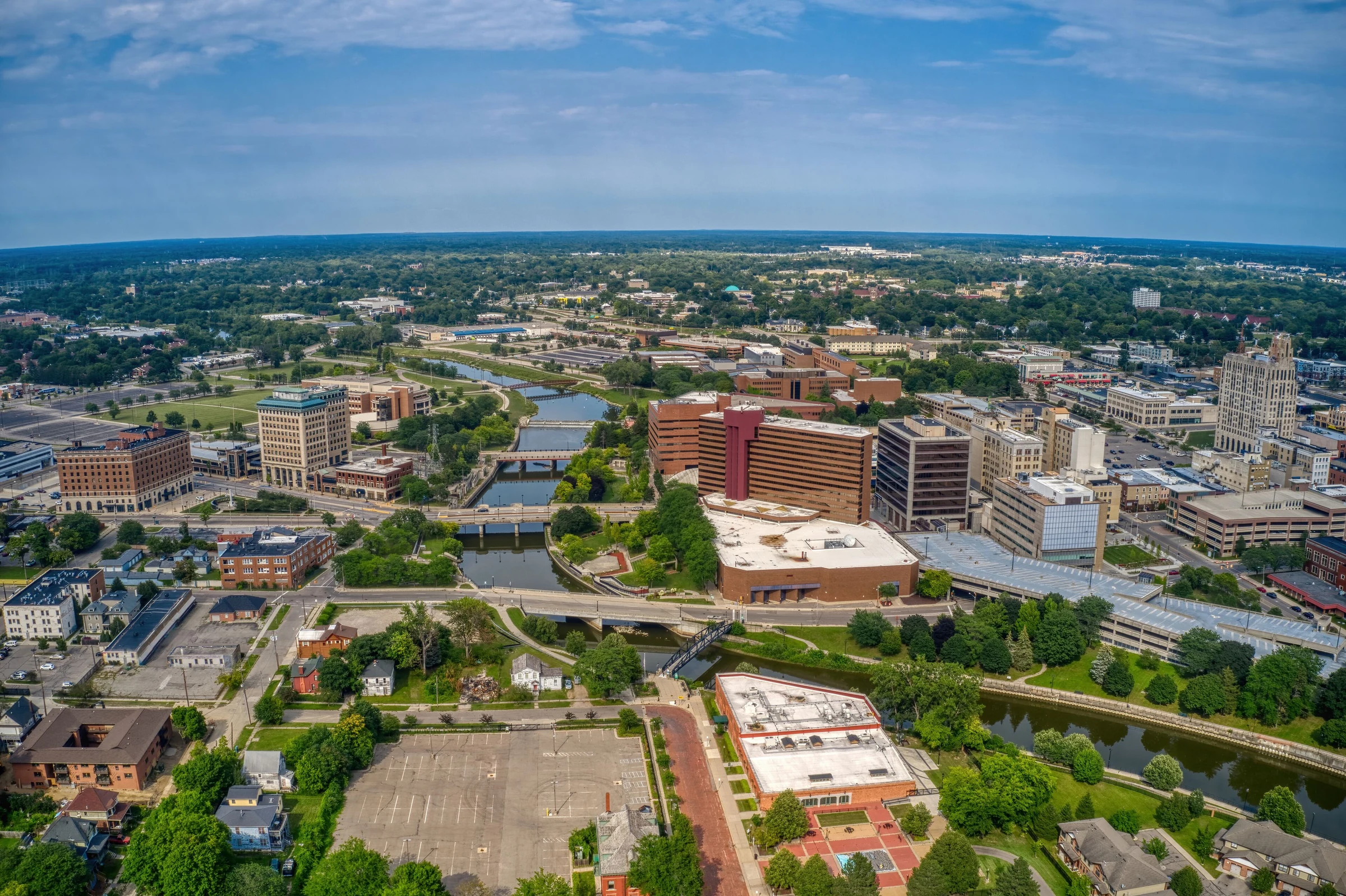
Commercial roofing in Downtown Flint, MI should begin with a documented assessment of membrane condition, seams, flashings, drainage, penetrations, and moisture before repair, coating, or replacement is selected. Downtown Flint packs hospital campuses, two universities, a cultural institution district, and a run of early-twentieth-century office buildings into a few square miles along the Flint River. Almost none of these buildings share a roof type, an age, or an occupancy pattern, which means downtown work rarely fits a standard template.
Hurley Medical Center and McLaren Flint
Both hospital campuses run continuous patient care, which puts the same constraints on roof work here that any occupied medical facility carries: no shutdown window, infection-control protocols around dust and containment, and hot-work permitting coordinated with facilities staff before a crew steps on the roof. Multiple building phases on each campus mean roof sections of different ages sit next to each other, so we map and price each section on its own rather than assuming uniform condition across the whole footprint.
Mechanical penthouses over surgical and imaging areas carry a dense concentration of exhaust, medical gas venting, and condenser penetrations, and that's where we focus flashing inspections first. A slow leak into a mechanical space above a sensitive unit is the kind of problem a hospital facilities team wants caught on an inspection, not discovered during a storm.
UM-Flint and Kettering University
The University of Michigan-Flint campus along the river and Kettering University's campus nearby both mix building ages across their footprints, from older masonry academic buildings to newer lab and student-life construction. Academic-year scheduling shapes the work calendar here almost as much as weather does: roof projects on classroom and lab buildings get planned around semester breaks and summer session gaps whenever the scope allows it, since a leak during finals week or a lab session creates a different kind of urgency than one during a quiet August.
Lab buildings carry their own penetration profile, with fume hood exhaust and specialized HVAC serving research space, and we treat those penetrations with the same care we'd give a hospital's lab exhaust, because contamination risk from a compromised roof detail isn't limited to medical buildings.
Both campuses also run their own facilities departments with specific vendor and safety requirements for contractors working on occupied buildings, background checks, badge access, and campus-specific fall-protection rules among them. We build those requirements into our scheduling from the first walk-through rather than discovering them the week a crew is set to mobilize.
The Flint Cultural Center
The Cultural Center district, home to the Sloan Museum, the Flint Institute of Arts, the Whiting Auditorium, and Longway Planetarium, holds a cluster of institutional buildings with real collections and equipment underneath their roofs, some of it irreplaceable. Humidity and temperature control inside these buildings matters as much as keeping water out, since a roof leak that raises interior humidity can threaten archival material or artwork long before anyone sees a wet ceiling tile. We coordinate closely with facilities staff on these buildings about interior climate impact as much as the roof itself.
Several of these structures date to different building eras, which means roof detailing, parapet construction, and drainage design vary from one building to the next even within the same district. We treat each one as its own roof rather than assuming what worked at the museum applies at the auditorium next door.
Saginaw Street's Older Office Buildings
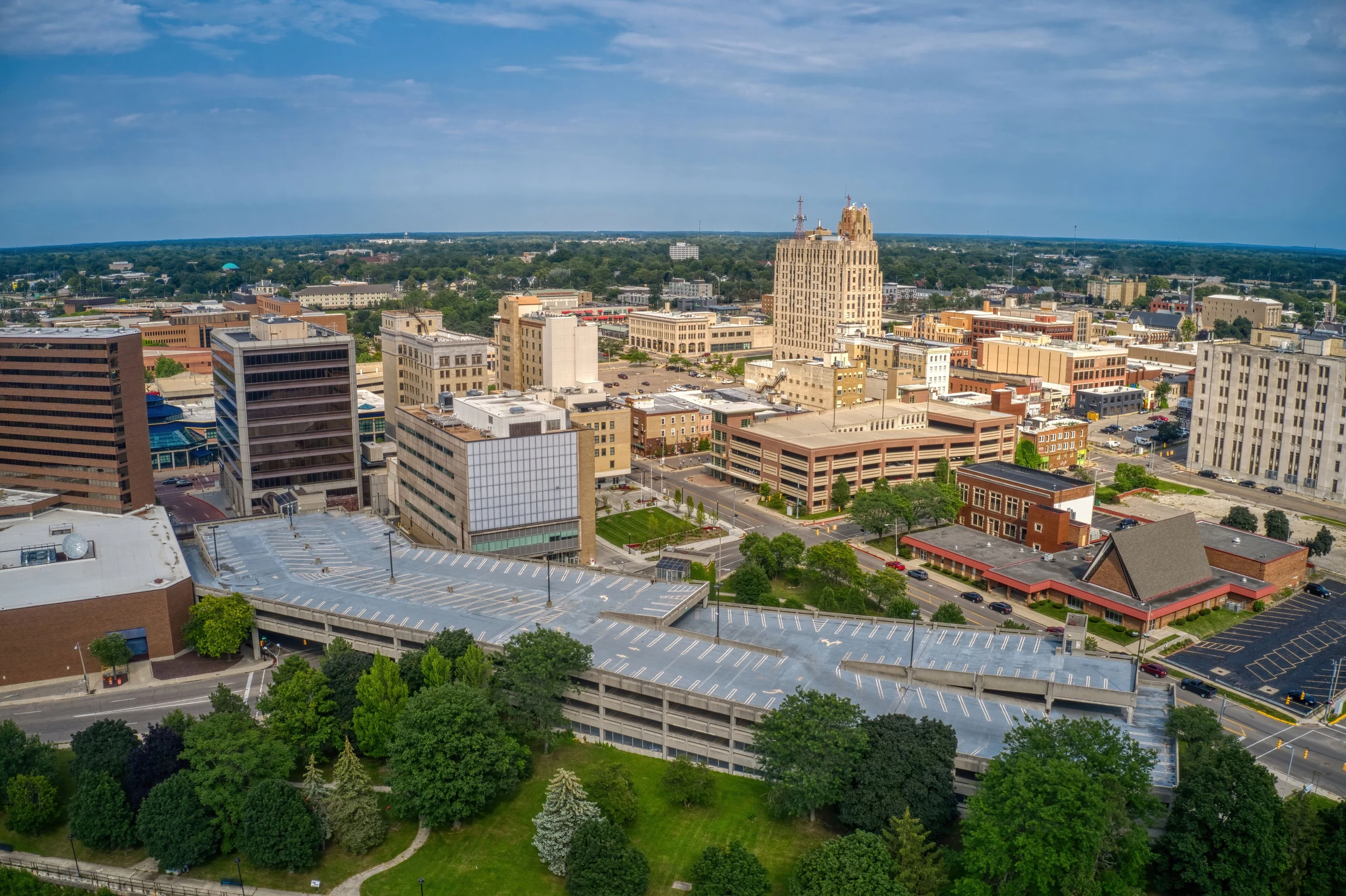
The downtown office towers and low-rise commercial buildings along Saginaw Street date back through most of the twentieth century, many with masonry parapets, built-up roofing recovered multiple times, and mechanical equipment added well after the original construction. Roof-to-wall transitions on older masonry parapets are a recurring leak point, since decades of freeze-thaw cycling work on the mortar and flashing differently than they do on a newer steel-frame building.
A downtown Flint roof assessment typically covers:
- Section-by-section mapping on multi-phase hospital and campus buildings
- Penetration flashing at exhaust, medical gas venting, and lab HVAC
- Masonry parapet and roof-to-wall transition condition on older buildings
- Interior humidity and climate impact assessment for cultural institution buildings
- Drain and scupper performance across each roof section
- Academic-calendar scheduling input for campus buildings
- Storm and hail damage documented by building and section
Scheduling Around an Occupied, Historic Downtown
Between continuous hospital operations, an academic calendar, and cultural institutions that can't close on short notice, almost every downtown Flint building has some version of an occupancy constraint that shapes when roof work can happen. We build the schedule around the building's actual operating pattern rather than defaulting to a standard weekday timeline.
Questions Downtown Flint Facilities Teams Ask Us
How do you handle roof access at an active hospital campus?
We coordinate access points, dust containment, and hot-work permitting with facilities staff before mobilizing, and phase the work so occupied areas below stay protected throughout.
Can university roof work be scheduled around the academic calendar?
Where the scope allows, yes. We plan classroom and lab building projects around semester breaks and summer session gaps to reduce disruption during active terms.
What's different about roofing a museum or performance-hall building?
Interior humidity and temperature control matter as much as keeping water out, since a leak that raises humidity can threaten collections or equipment before any visible damage appears. We coordinate on climate impact as much as the roof membrane itself.
Why do older Saginaw Street buildings leak at the parapet more than the field of the roof?
Decades of freeze-thaw cycling affect masonry and flashing at wall transitions more than they affect a flat membrane field, and multiple re-cover layers over time can mask developing problems at those transitions.
How fast can you respond to an active leak over a hospital mechanical space?
That's a same-day priority. We get a dry-in in place to stop the active path before doing the full diagnosis.
Related
Ready to review the roof scope?
Let’s Talk About Your Commercial Roof
Share the building, roof history, known leaks or damage, access constraints, and schedule. We’ll start with the roof condition and the facility below it.