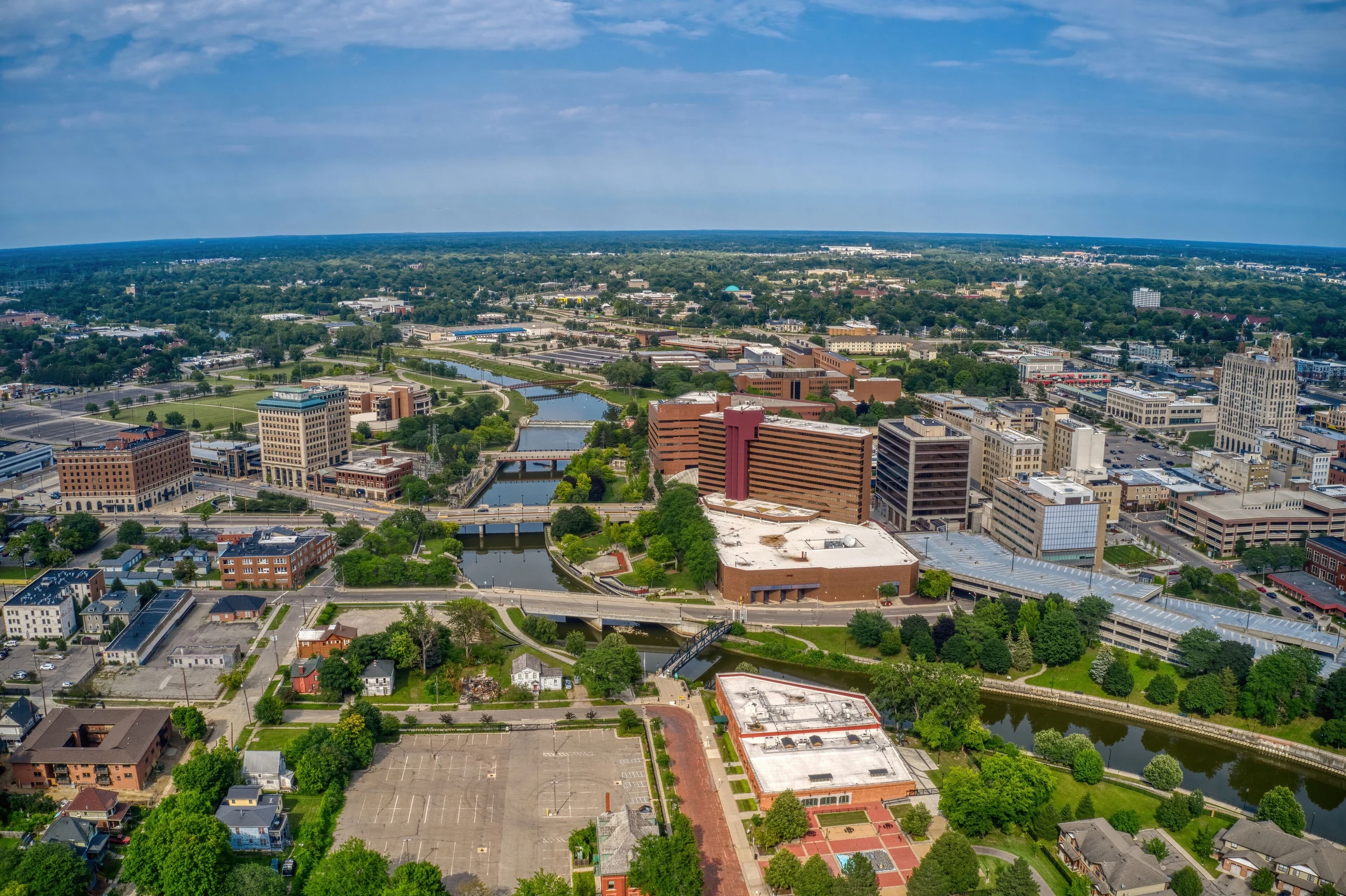

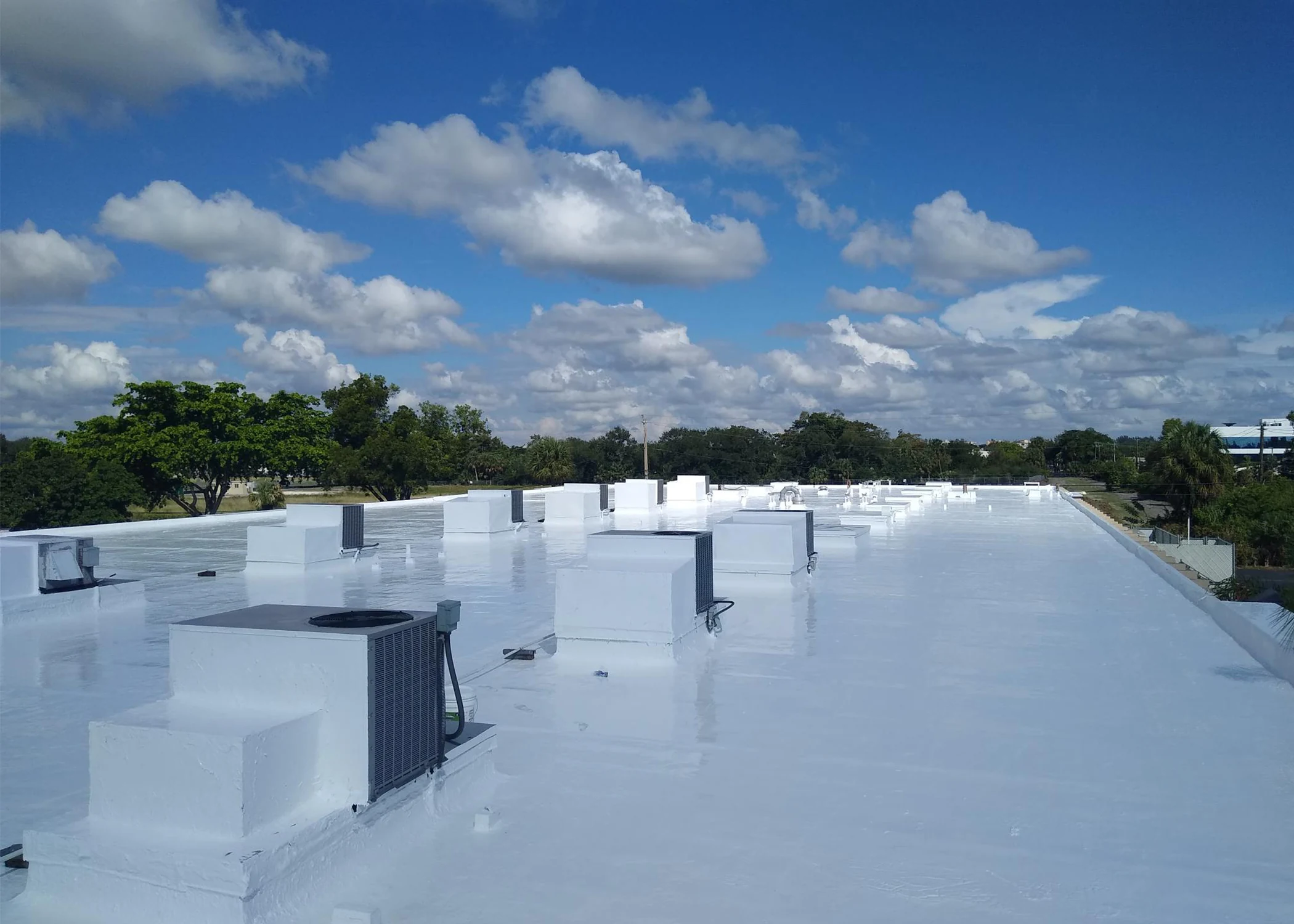
Silicone Roof Coatings in Flint, MI
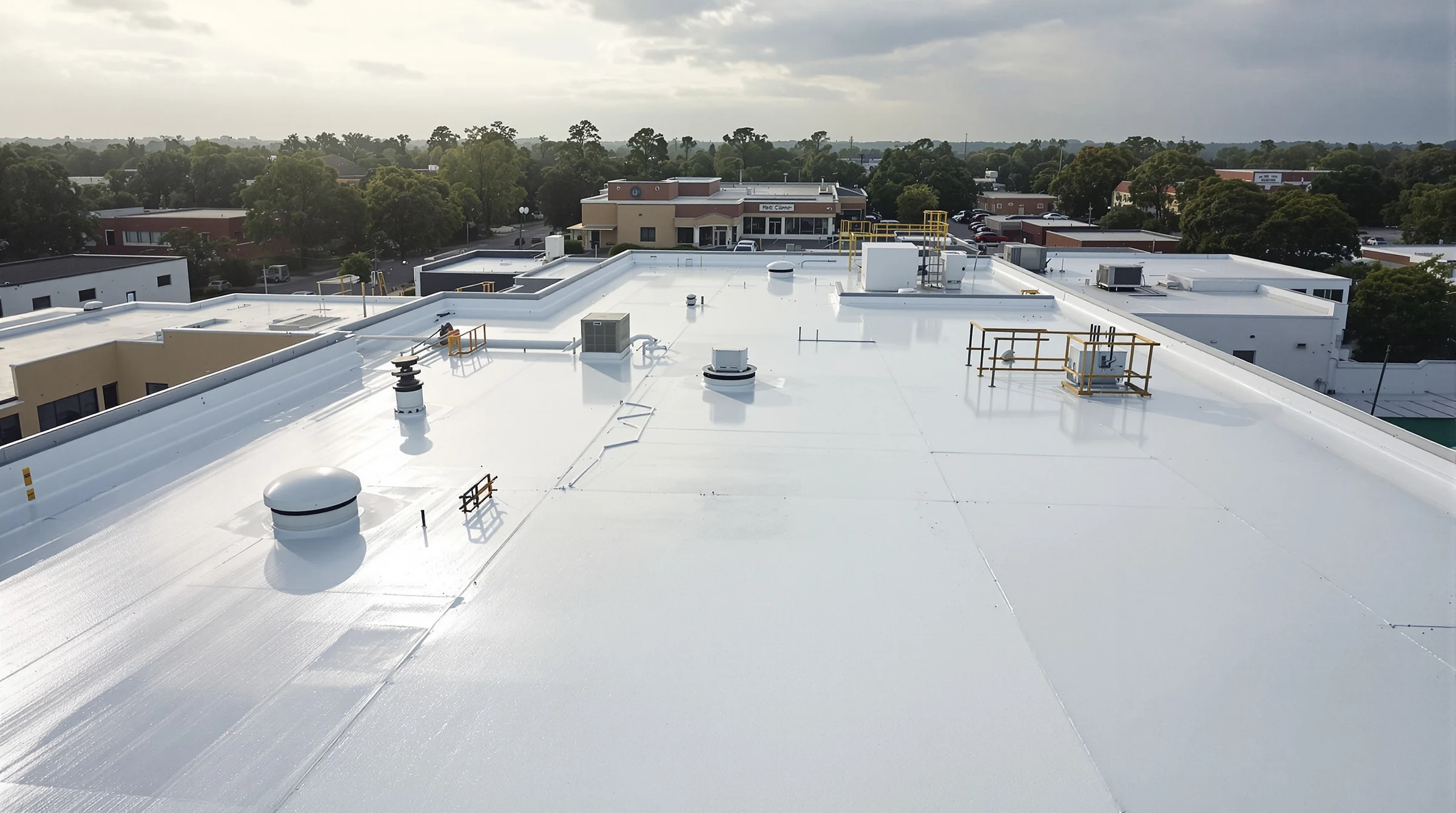
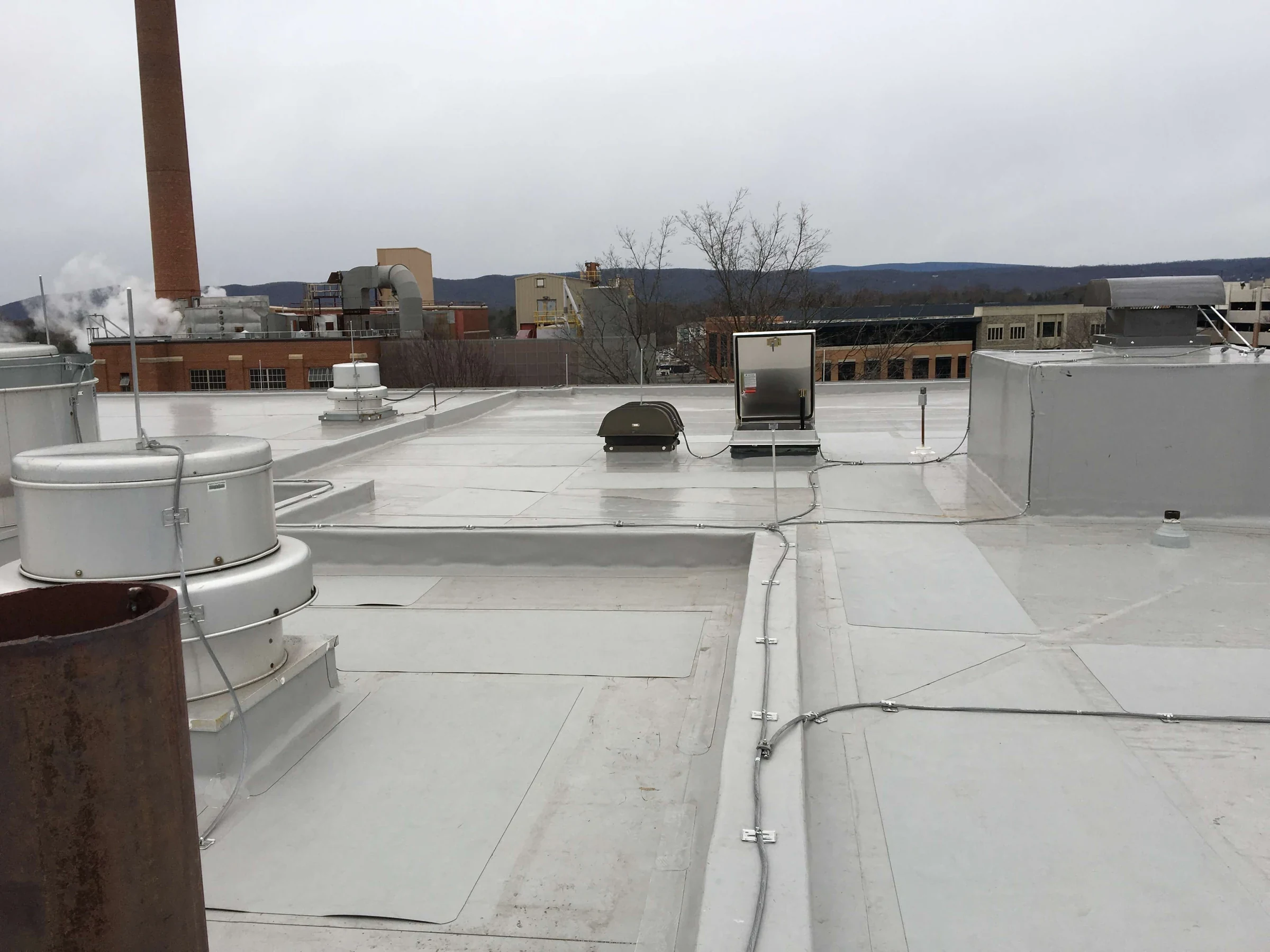
Silicone Coating as the Restoration Path Over a Full Tear-Off
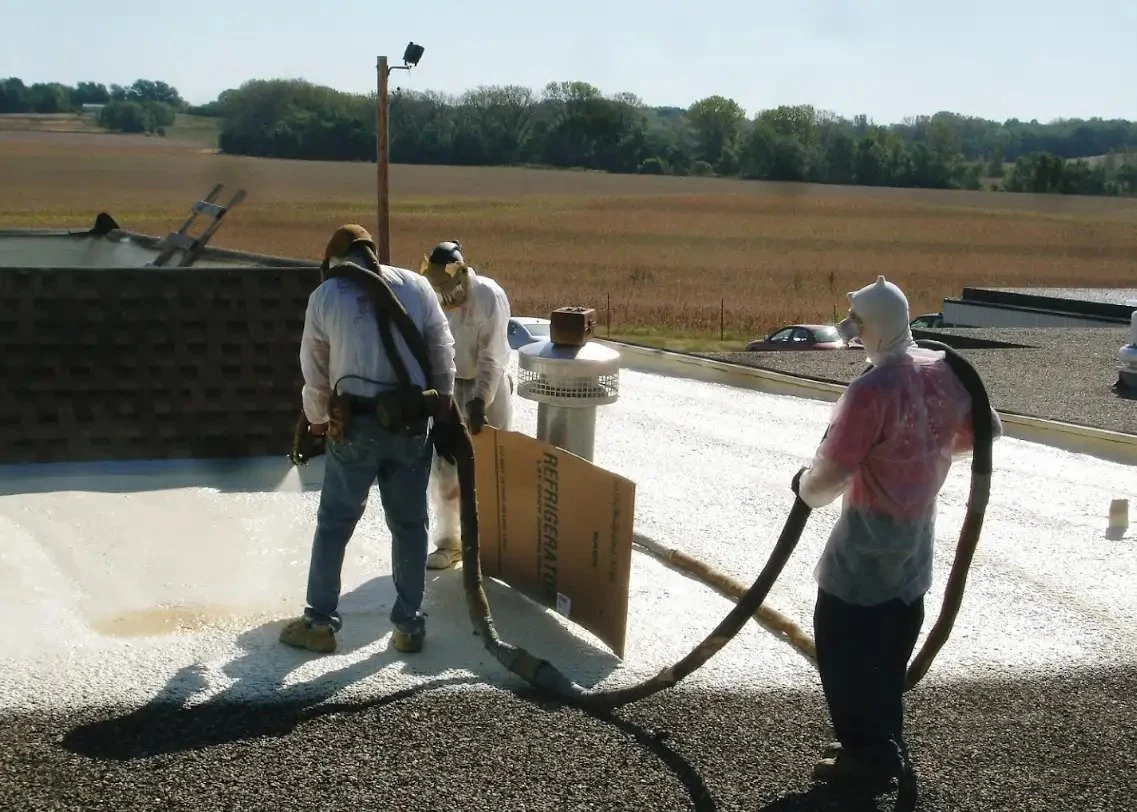
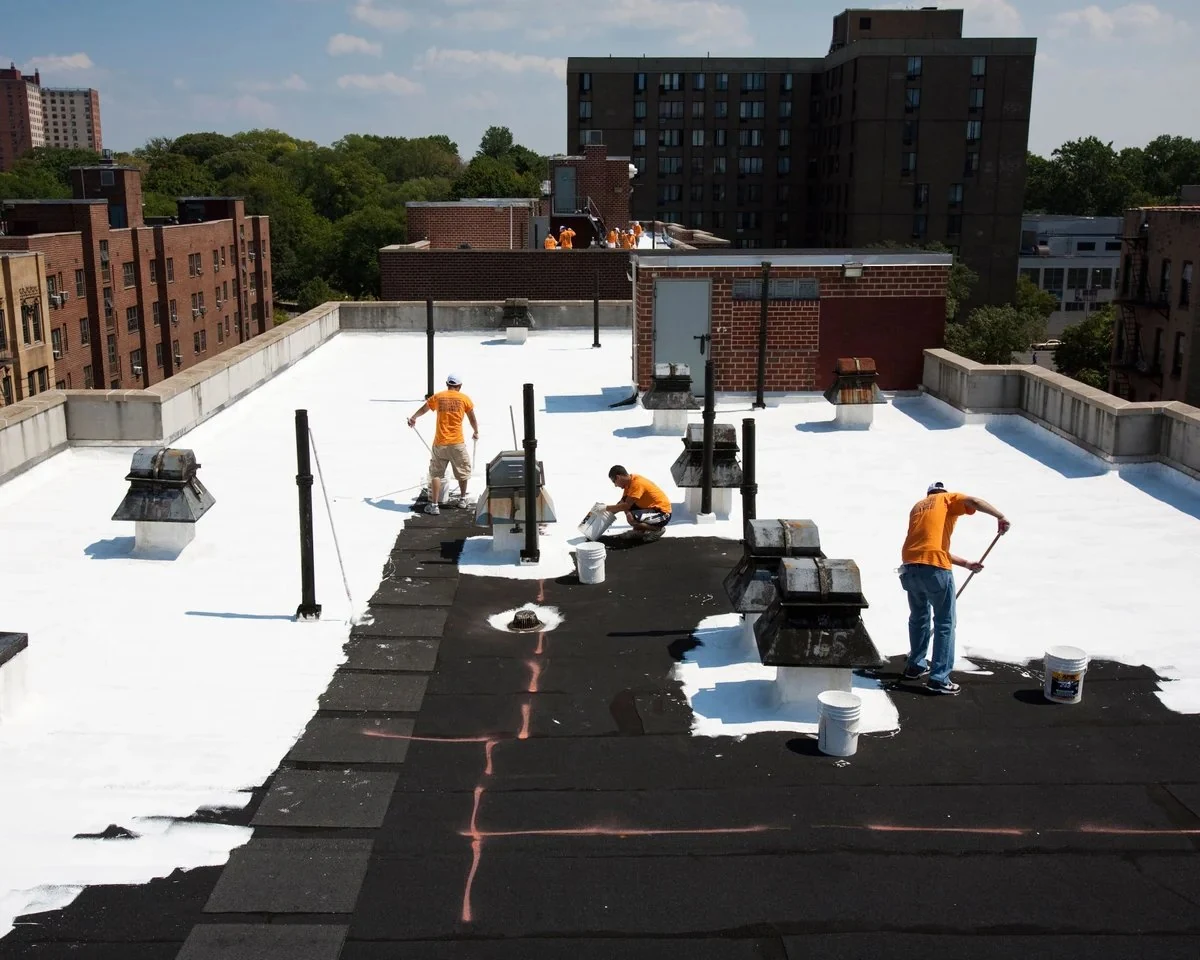
Silicone coating is the option we bring up most on buildings where the existing roof is worn but structurally sound, and the owner isn't ready to fund a full replacement. It's a real restoration path, not a stall tactic, on the right substrate.
Why Restoration Fits Flint's Commercial Real Estate Picture
A lot of the buildings we inspect around Genesee County carry uncertain resale value, older manufacturing space, aging strip retail, buildings that have changed hands more than once since the auto industry contracted decades ago. Owners in that position are often better served stretching a sound roof's life another decade with a coating than financing a full tear-off on an asset whose future use isn't locked in.
That's the calculation behind most silicone coating quotes we write: not that coating is inherently better than replacement, but that it's the right tool for a building where the existing membrane still has structural life left and the owner's horizon doesn't justify a full reroof.
What Actually Qualifies for a Coating
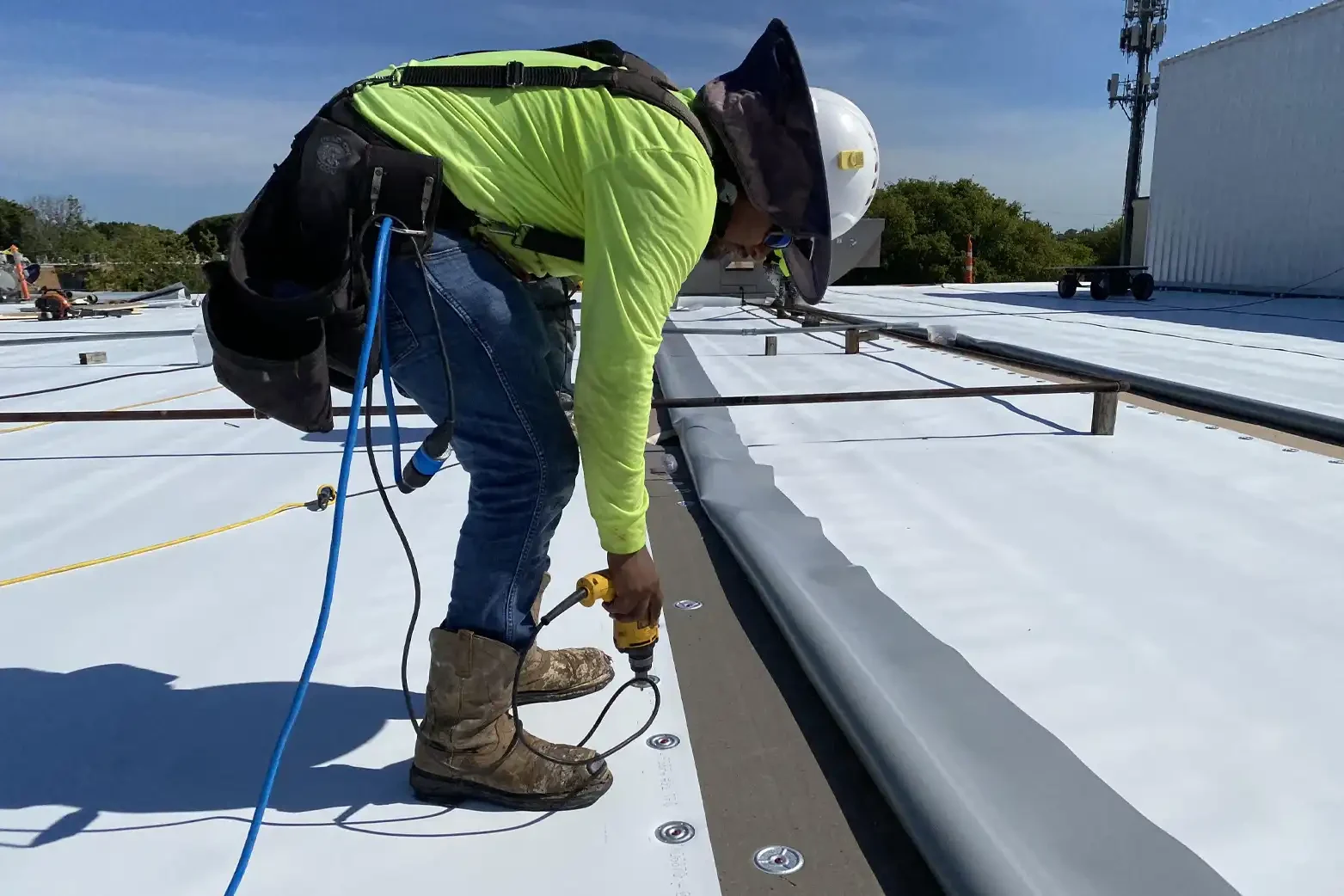
Silicone coating restores a membrane's weatherproofing surface, it doesn't fix a structurally compromised roof. Before we recommend it, we check for wet insulation with a moisture scan, confirm the deck is sound, and inspect every seam and flashing detail, because coating over a wet substrate just traps the moisture and accelerates the roof's failure instead of preventing it.
If the scan or the seam inspection turns up problems that coating can't solve, we say so and price a recover or replacement instead. Coating a roof that needs a real repair first is the kind of shortcut that costs an owner more in the long run.
Ponding Water Resistance, Where Silicone Beats Other Coatings
Silicone genuinely outperforms acrylic coatings in standing water, which matters on a lot of Flint's older buildings that were built with minimal roof slope. Where acrylic coatings can soften or degrade under chronic ponding, silicone holds up to prolonged water contact, which is why it's usually our recommendation over acrylic on any roof with known low points that don't drain within the standard window after rain.
We still tell owners that a coating doesn't fix the underlying slope problem, it just gives the surface a better material to sit under standing water than the alternative. Where ponding is severe, we'll flag whether adding drainage improvements alongside the coating makes more sense than coating alone.
Surface Prep and Why It Determines the Outcome
Coating adhesion depends entirely on what's underneath it. A membrane covered in years of dirt, chalking, or biological growth won't hold a coating evenly no matter how good the product is, so pressure washing and, where needed, a primer coat come before any silicone goes down.
We document substrate condition at every stage of prep, since the mil thickness and prep quality together are what the manufacturer's warranty is actually underwritten against. Skipping prep to save a day on the schedule is the fastest way to void that coverage before the roof has even seen its first winter.
- Moisture scan results across the full field
- Seam and flashing condition before coating
- Ponding water locations and drainage timing
- Existing membrane substrate cleanliness
- Applied mil thickness at coating completion
- Areas of prior patch or repair needing extra prep
Recoat Cycles and Long-Term Maintenance
A silicone coating isn't a one-time fix, it's a maintenance system. Manufacturers publish recoat intervals based on mil thickness and UV exposure, and we build that into the maintenance conversation up front rather than letting an owner assume the coating job is permanent. Tracking recoat timing is what keeps a coated roof performing for its full extended service life instead of quietly degrading past the point where a recoat is still cost-effective.
We also walk coated roofs during regular maintenance visits specifically checking for pinholing, thin spots at seams, and any area where foot traffic has worn the coating down faster than the field around it.
What a Coating Warranty Covers
Coating manufacturers offer warranty terms tied to applied mil thickness and documented substrate condition at the time of application. That means the moisture scan and prep documentation aren't just due diligence for us, they're part of what qualifies the roof for warranty coverage in the first place, and we keep that file on hand for every coated roof we maintain.
Coating warranty terms tend to run shorter than a full membrane replacement's warranty, which is part of the honest cost comparison we walk owners through before they decide between restoration and replacement.
Silicone Coating Questions From Flint Owners
Is a silicone coating a real fix or just a delay tactic?
On a roof with a sound deck, dry insulation, and intact seams, it's a genuine restoration that extends service life for a fraction of replacement cost. It's not the right answer on a roof with wet insulation or structural problems, and we'll tell you if that's the case.
How do you know if my roof qualifies for coating instead of replacement?
We run a moisture scan and a full seam and flashing inspection first. If the substrate is dry and sound, coating is usually on the table. If the scan finds wet insulation or the deck shows problems, we recommend recover or replacement instead.
Does silicone coating actually handle standing water better than other coatings?
Yes, it holds up to prolonged ponding better than acrylic coatings, which can soften under chronic standing water. That makes it the stronger option on Flint's older, minimally sloped roofs where drainage was never ideal to begin with.
How often does a silicone-coated roof need to be recoated?
It depends on the applied mil thickness and UV exposure, and manufacturers publish specific intervals for their products. We build the recoat schedule into your maintenance plan so it doesn't get missed.
Can you coat a roof that already has a patch history?
Often yes, but patched areas usually need extra surface prep to make sure the coating bonds evenly. We inspect and document those spots specifically before applying coating over the rest of the field.
Related
Ready to review the roof scope?

Let’s Talk About Your Commercial Roof
Share the building, roof history, known leaks or damage, access constraints, and schedule. We’ll start with the roof condition and the facility below it.