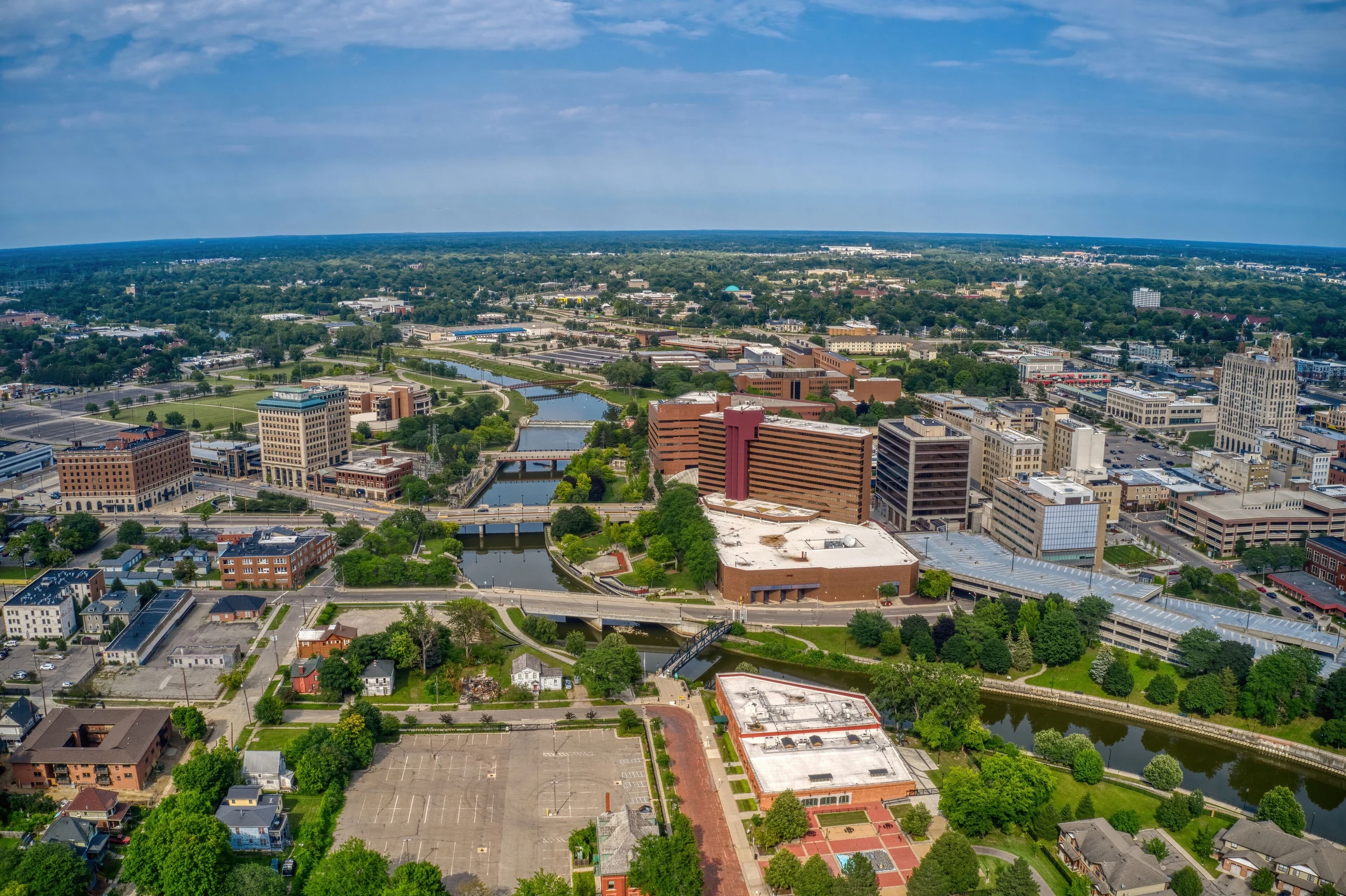

Automotive & Manufacturing Roofing in Flint, MI

Roofing for Flint's Plant Floors and Supplier Shops
Flint's manufacturing base still runs on roofs that were installed decades before anyone worried about single-ply membranes or spray foam recover systems. We work on the low-slope roofs over GM Flint Assembly and Flint Engine, and on the smaller supplier buildings strung along Van Slyke Road, Dort Highway, and the I-475 corridor that keep those plants running. Manufacturing roofing is a different job than retail or office work, and we price and schedule it that way.
What's Still Standing From an Older Build Era
A lot of the low-slope roofing over Flint's plant floor and supplier shops was installed when built-up asphalt roofs were the default choice for large industrial footprints. Some of it has been recovered once or twice since; some of it hasn't. We spend real time on the roof before we quote anything, because a BUR system that looks intact from the parking lot can have soaked insulation underneath from years of small leaks that never got traced back to their source.
Where the deck condition doesn't justify a full tear-off, we look at fleece-back TPO or a silicone recover system instead. Both let us add a new, warrantied membrane over sound insulation without pulling the building's production schedule into a multi-week tear-off. Where the deck or insulation has failed, we say so, and we explain why a recover would just be putting new membrane over a wet problem.
Legacy buildings tied to Flint's decades of auto production carry roof histories that don't always show up in current ownership records. When a supplier building changes hands, the new occupant sometimes inherits a roof assembly nobody has fully documented, with layers added by different contractors solving different problems at different times. We pull that history together as part of any inspection rather than assuming a supplier building's current age tells the whole story of what's actually on the roof.
Rooftop Equipment That Actually Belongs on a Plant Roof
Manufacturing roofs carry equipment you don't see on a strip mall: paint booth exhaust stacks, dust collection housings, compressor pads, cooling tower curbs, and sometimes overhead crane rail supports that penetrate the deck. Every one of those penetrations is a place water can find a way in, and every one needs flashing detail work that matches the equipment, not a generic pitch pan dropped over the gap.
We also see a lot of secondary rooftop conduit and piping runs added over the years by different trades, none of which were necessarily coordinated with the roofing membrane underneath. Part of our job on these buildings is untangling that history so the next penetration doesn't become the next leak.
Catwalks and rooftop access platforms built for maintenance crews servicing exhaust and dust collection equipment add their own penetration points and wear patterns to track. Foot traffic concentrated along those access routes wears membrane faster than the surrounding field, and we check those paths specifically rather than assuming general wear applies evenly across the roof.
Scheduling Around Production, Not Around Us
A plant doesn't stop running because a roof needs work. We plan tear-off and recover sequencing around shutdown windows, shift changes, and whatever access restrictions a facility's EHS team requires, and we keep dry-in materials staged so an unexpected rain event doesn't turn into a production-floor problem. For supplier buildings running tighter margins on downtime than the assembly plants themselves, we section the roof into zones so only a portion is ever open at once.
We also coordinate directly with plant maintenance and safety staff rather than routing everything through a general contractor layer that slows down decisions. On a manufacturing site, the facilities manager usually knows more about what's below the roof deck than anyone else on the project, and we treat that knowledge as part of the scope.
Tier-one suppliers feeding directly into an assembly plant's production line often have less schedule flexibility than tier-two shops with more buffer in their own delivery commitments. We ask about that position in the supply chain early in a project, since it changes how conservative we need to be about sequencing and how much redundancy we build into weather contingency planning.
Common Roof Systems We Find on Flint's Industrial Buildings
Across the plants and the supplier base that supports them, the roofs we're called out to fall into a handful of categories:
- Aging built-up asphalt roofs on original plant sections, often past their service life
- TPO and EPDM single-ply over supplier warehouses and additions built in the past 20 years
- Modified bitumen sections patched over decades by different contractors
- Standing seam metal over office and administrative wings attached to plant buildings
- Spray polyurethane foam recover on buildings where a past owner needed a fast, lightweight fix
- Silicone-coated membranes on roofs that got a recoat instead of a tear-off
Snow Load and Drainage on Large Flat Roofs
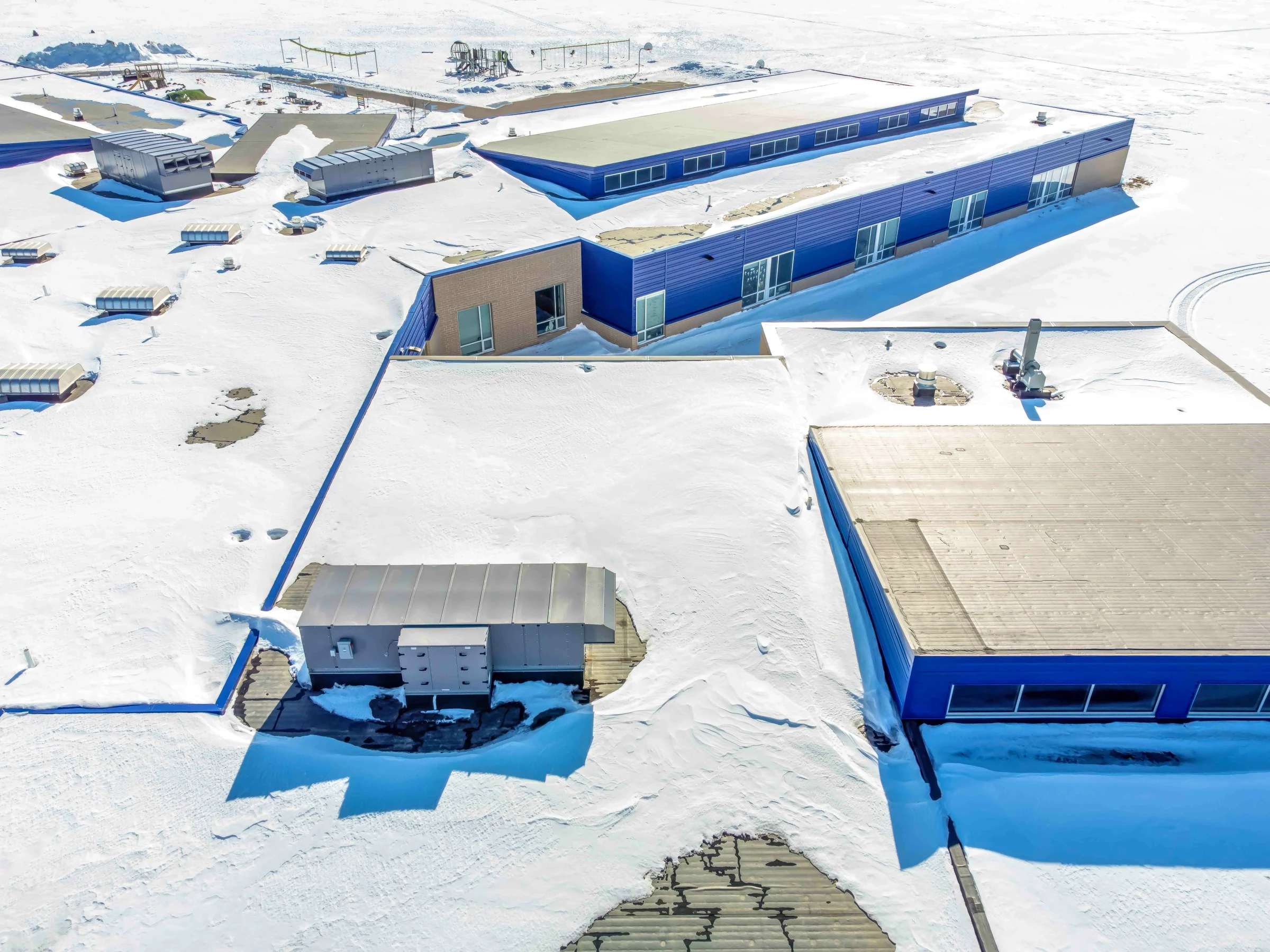
Michigan winters put real weight on a roof this size. A plant or supplier building roof can hold snow long after a residential roof has shed it, especially on the leeward side of parapets and equipment screens where drifting concentrates load. We check drain and scupper capacity as part of every inspection, because a plugged drain on a 200,000-square-foot roof doesn't just pond water, it can hold enough weight to stress a deck that's already carrying decades of recover layers.
Freeze-thaw cycling is the other issue we watch for on older BUR sections. Water that gets into a seam or a blister in November and freezes repeatedly through the winter does more damage by March than the original leak ever would have on its own. We flag that kind of active deterioration on inspection reports so a facility can decide whether to patch through the season or plan a recover before next winter.
What Flint Plant and Facility Managers Ask Us
Can you work without shutting down a production line?
In most cases, yes. We section large roofs and schedule around shift patterns so work happens over inactive areas first. We'll tell you upfront if a section genuinely requires downtime to do safely.
Do you handle roofs with heavy exhaust and dust collection equipment?
That's most of what we work on in this market. We flash around paint booth stacks, dust collectors, and compressor curbs as a matter of course, and we coordinate penetration work with your maintenance team.
Is a recover system enough, or do we need a full tear-off?
It depends on what's under the current membrane. We check insulation moisture content before recommending either option and explain the tradeoffs in plain terms.
Do you work with insurance on storm-related plant roof damage?
Yes. We document wind and hail damage with photos and measurements a claims adjuster can use, and we can walk a roof with your adjuster if that's useful.
How do you handle older buildings with multiple past recover layers?
We core-sample to see what's actually in the roof assembly before quoting. Buildings that have been recovered more than once sometimes need a full tear-off because there's no more room to add another layer within code.
Related
Ready to review the roof scope?
Let’s Talk About Your Commercial Roof
Share the building, roof history, known leaks or damage, access constraints, and schedule. We’ll start with the roof condition and the facility below it.