

TPO 80-Mil Roof Systems in Flint, MI
When 80-Mil TPO Earns Its Cost on a Flint Roof
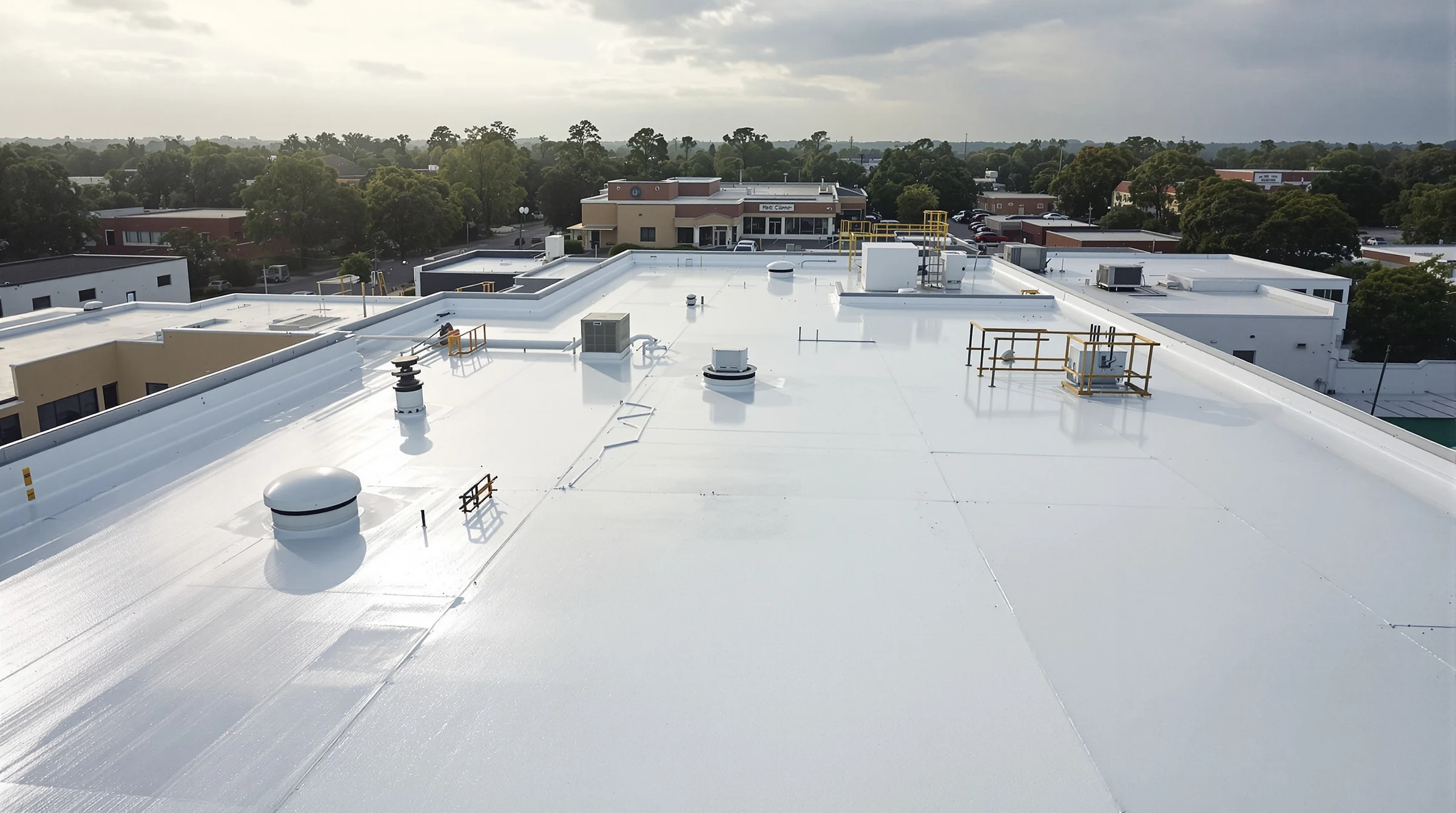
We move up to 80-mil TPO on a narrower set of jobs than 60-mil: buildings carrying heavy rooftop equipment, converted industrial space with frequent service traffic, or owners planning to hold the asset well past a typical warranty term. The extra mils are pure top-ply weathering material, and on the right roof that matters.
Where the Extra Thickness Actually Pays Off
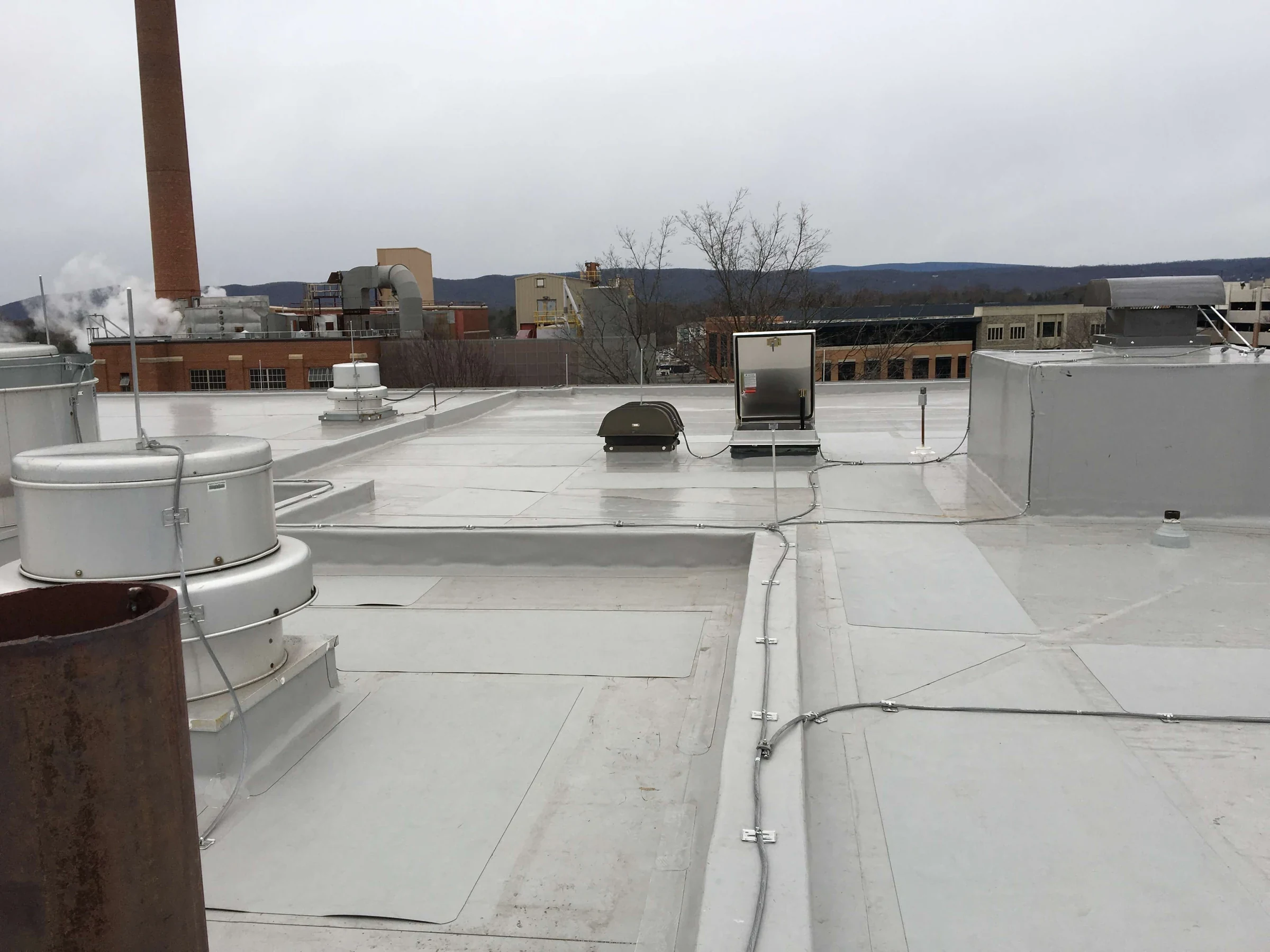
The reinforcing scrim sits in the same location in 60-mil and 80-mil sheet; everything added above it is top-ply material that takes the weathering and the foot traffic first. On a distribution building near Bishop International Airport with multiple HVAC units and a service crew walking the field every quarter, that extra ply is the layer that burns off before the scrim is ever exposed.
We also see this spec requested on repurposed manufacturing buildings, old Delphi and AC Spark Plug-era shops that have been subdivided into multiple smaller commercial tenants, each with its own rooftop unit. More curbs and more units mean more traffic paths across the membrane, and 80-mil gives that traffic more material to wear through before it becomes a maintenance problem.
Equipment Curbs, Walk Pads, and Traffic Planning
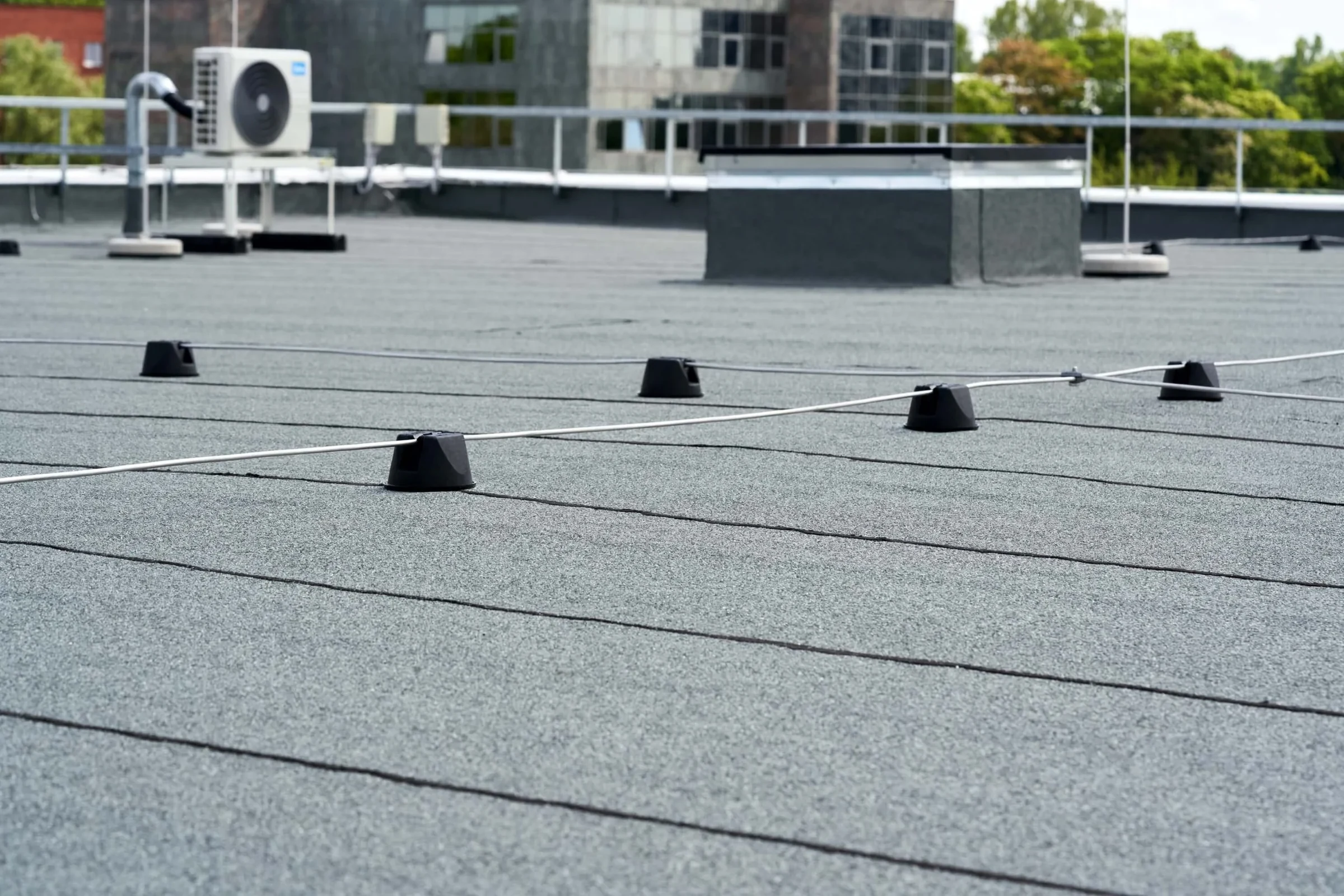
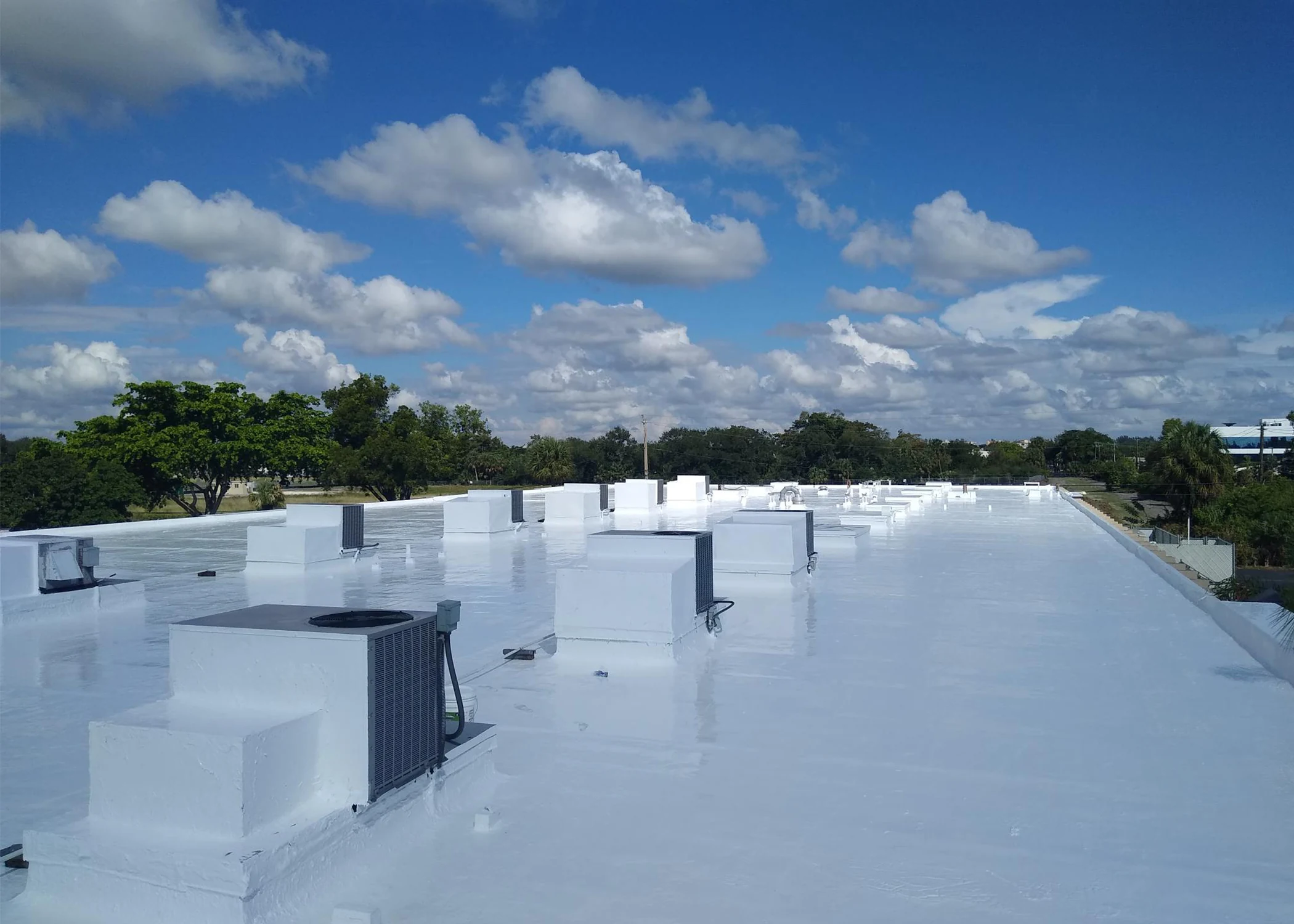
A roof with a dozen curb-mounted units needs a traffic plan in addition to a membrane spec. We lay out walk pads along the most-used service paths and route conduit and refrigerant lines to avoid crossing membrane at grade, which keeps foot traffic and equipment work off the field membrane where it is not protected.
Curb flashing gets the same attention. Every unit added to an aging Flint building after original construction is a penetration that was not in the roof's original design, and each one is a place where a rushed flashing detail turns into the callback.
Cold-Weather Welding on a Thicker Sheet
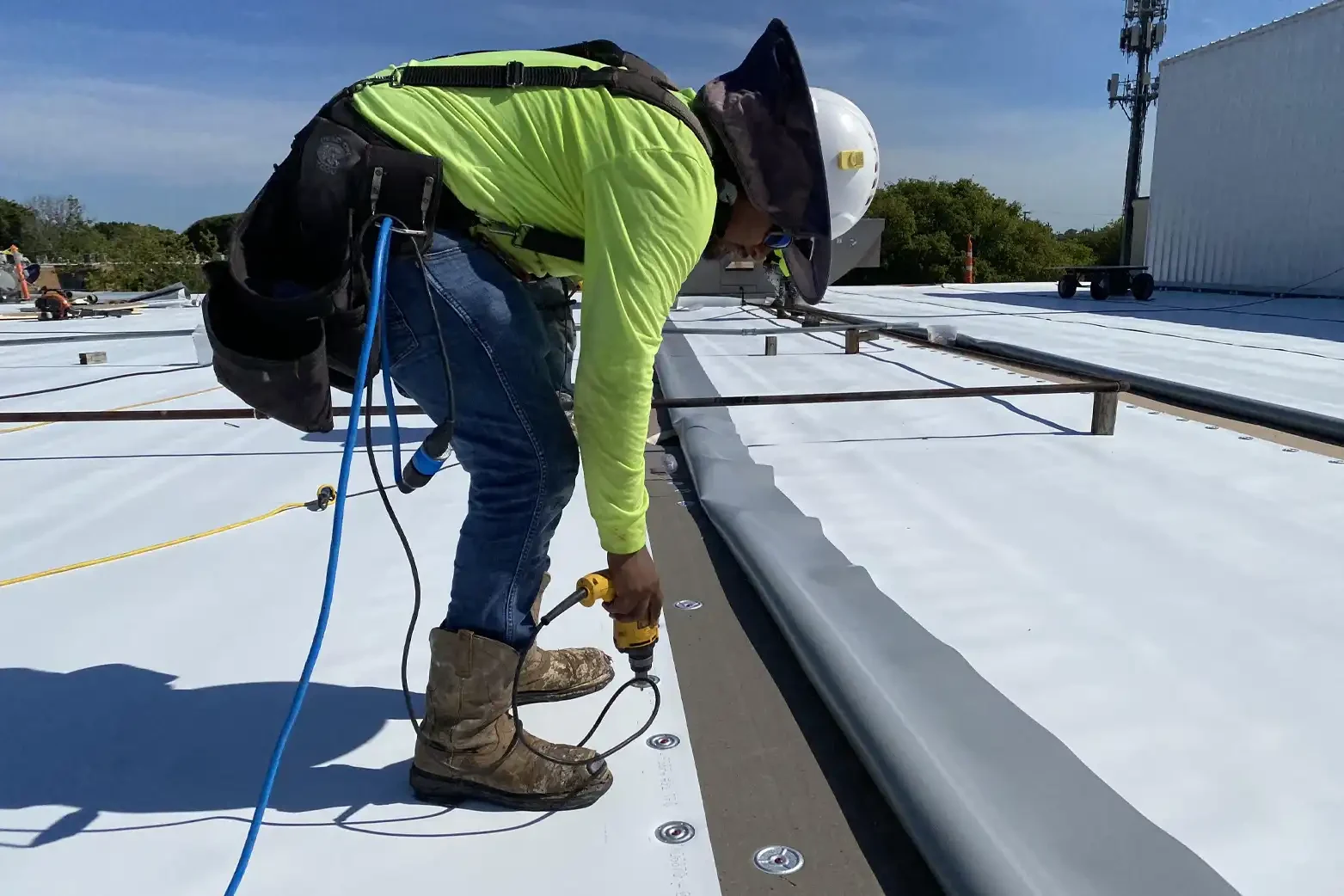
80-mil sheet takes longer to reach welding temperature than 60-mil, and it holds heat differently once it does. Our crews adjust weld speed and roller pressure for the heavier gauge rather than running the same settings they'd use on a standard job, and we still probe every seam before calling a section complete.
On late-season work, that means budgeting more time per linear foot of seam, not less, even though the finished roof reads as more durable. Rushing a thicker membrane in marginal weather produces the same cold-weld risk as rushing a thin one, just with a bigger material cost sitting on top of it.
Snow, Ice, and Long-Term Wear Near Rooftop Units
Rooftop units generate their own microclimate on a roof: warm exhaust melts snow immediately around a curb even while the surrounding field stays covered, and that meltwater has to go somewhere. If the drainage plan doesn't account for it, water tracks away from the unit and refreezes at the nearest low point or parapet, which is a different ice-damming pattern than what shows up on a roof with no equipment at all.
We map curb locations against the drainage plan on every 80-mil job specifically because of this, checking that meltwater from each unit has a real path to a drain rather than pooling against a neighboring curb or wall.
- Curb flashing height and termination bar seal
- Walk pad placement along service routes
- Conduit and line-set penetration seals
- Drain capacity relative to added rooftop hardware
- Field seam wear near high-traffic curbs
- Insulation condition immediately around each unit
Recover Candidates With Existing Equipment
A lot of the 80-mil quotes we write are recover jobs, not tear-offs, because the building already has rooftop units in place and the owner does not want a full mechanical disconnect and reset. We core around each curb to check the deck and insulation locally, since a leaking curb often means wet insulation in a ring around that one unit even when the rest of the field tests dry.
Where that's the case, we can sometimes spot-repair the insulation at the affected curbs and recover the rest of the field, which keeps the job scoped to what actually needs replacing instead of a blanket tear-off driven by one bad penetration.
Warranty Terms on Heavier-Traffic Roofs
Manufacturers extend the same NDL warranty structure to 80-mil that they offer on 60-mil, tied to the same requirement: installation against the published detail drawings and a field inspection before the warranty issues. On equipment-heavy roofs, the detail drawings that matter most are the curb and penetration flashings, since that is where a heavy-traffic roof actually fails first, not in the open field.
We flag any equipment added after the roof's original installation as a separate documentation item, since a curb installed by someone other than the original roofing contractor is exactly the kind of detail that can compromise a warranty if it wasn't flashed to the manufacturer's standard.
What Owners Ask About 80-Mil TPO
Is 80-mil worth the added cost over 60-mil?
On a roof with routine equipment traffic or a long planned hold, usually yes, because the added material is exactly the layer that takes the wear first. On a simple low-traffic office roof, 60-mil generally gets you the same warranty term for less money.
Does 80-mil TPO handle Flint winters differently than 60-mil?
Not fundamentally. Both need proper drainage to avoid standing meltwater and ice damming at low points. The thicker sheet does take longer to reach hot-air weld temperature, which our crews account for in scheduling and technique.
Can 80-mil be installed around existing rooftop units without disconnecting them?
In most cases yes, working around active curbs with careful flashing sequencing. We core near each unit first to check for wet insulation before deciding whether the field around it recovers cleanly or needs a local repair.
How long does an 80-mil roof typically last on a Flint building?
Service life depends more on drainage, flashing quality, and maintenance than the membrane thickness alone, but the added weathering ply generally extends useful life on high-traffic roofs compared to the same install in 60-mil.
Do you need a special crew certification to install 80-mil TPO?
It is installed with the same hot-air weld process as 60-mil, adjusted for the heavier gauge. What matters for the warranty is that the finished roof matches the manufacturer's detail drawings and passes the field inspection before the warranty is issued.
Related
Ready to review the roof scope?

Let’s Talk About Your Commercial Roof
Share the building, roof history, known leaks or damage, access constraints, and schedule. We’ll start with the roof condition and the facility below it.