
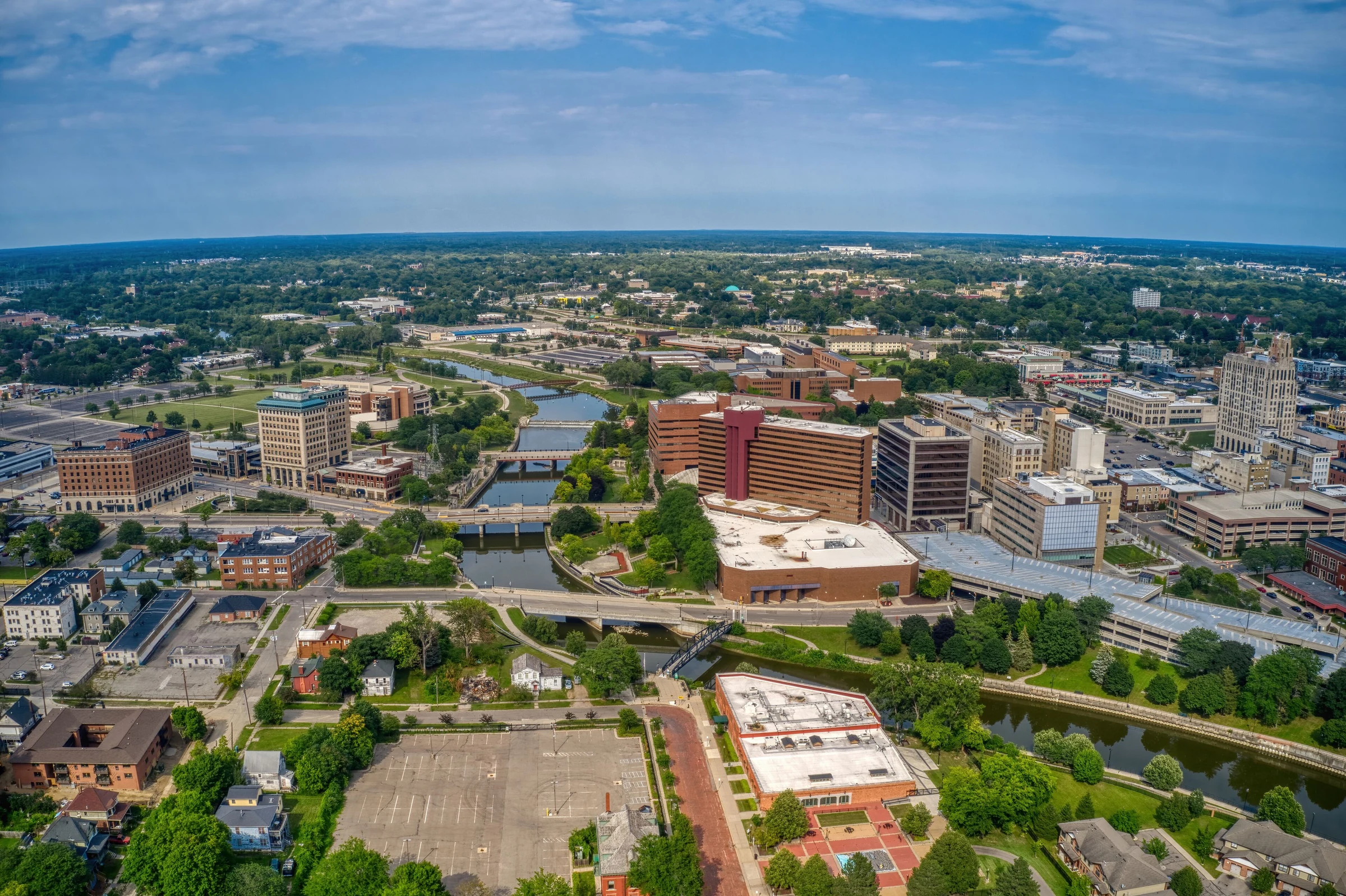
Commercial Roofing Contractors Grand Blanc Township, MI
Commercial Roofers in Grand Blanc Township
Commercial roofing in Grand Blanc Township should begin with a documented assessment of membrane condition, seams, flashings, drainage, penetrations, and moisture before repair, coating, or replacement is selected. Grand Blanc Township wraps around the city of Grand Blanc with a mix of medical office buildings, retail plazas, and light-industrial space that grew up along Saginaw Street, Perry Road, and the I-475 corridor. None of it is one roof type, and pricing it well starts with knowing which stretch of the township a building sits in.
Medical Office Buildings Off Saginaw Street and Perry Road
The medical office buildings scattered through the township, many of them built to serve patients referred through the area's larger hospital campuses, carry roofs that have to stay dry over exam rooms, imaging equipment, and pharmacy storage without exception. A leak here isn't a cosmetic problem; it can shut down a room or contaminate supplies that can't be replaced same-day.
Most of these buildings are single-story or low-rise with mechanically fastened single-ply over polyiso, and the roof penetration count runs high relative to the building's size: rooftop condensers for imaging equipment, dedicated exhaust for lab space, and standby generator connections all cut into a membrane that has to stay sealed around every one of them. We inspect penetration flashing first on any medical office roof because that's where these buildings tend to leak.
Scheduling matters as much as the scope. A medical office can't close for a day the way a warehouse can, so recover and repair work on these buildings gets staged around patient hours, often early morning or weekend windows, with interior protection in place for any ceiling tile below active work.
Retail Plazas Along the Corridor
The strip retail and small plaza buildings along Perry Road and the outer stretches of Saginaw Street carry a mix of older built-up roofing and newer single-ply recover, depending on when each plaza last turned over a tenant or an anchor. Parapet-to-roof transitions and drain placement behind parapet walls are the recurring trouble spot, the same as anywhere else in the county, but the tenant mix here skews toward professional offices and service retail rather than restaurants, which means fewer grease-exhaust penetrations and more standard HVAC curbs to track.
Anchor tenant turnover in these plazas is slower than what we see nearer the interstate, which means roof age tends to track more closely with when the plaza was originally built rather than with tenant-driven renovation cycles. That makes long-range capital planning more predictable for property managers who want a multi-year roof budget rather than a reactive one.
Light-Industrial Space Near I-475
The light-industrial buildings closer to the interstate run smaller than the supplier plants elsewhere in the county, more warehouse-and-office combination space than heavy manufacturing. Roofs here are typically mechanically fastened TPO or EPDM over metal deck, built within the last two to three decades, which means they're less likely to need full tear-off and more likely to be candidates for a straightforward recover when the membrane starts to age out.
Owner-occupied buildings in this category often want a maintenance plan more than a one-time repair, since the owner is also the one who feels every unplanned closure. We build inspection schedules around that priority: catching small membrane and flashing issues before they become an emergency call.
Freeze-Thaw and Storm Season Across the Township
Every roof type in Grand Blanc Township deals with the same seasonal pattern: winter freeze-thaw cycling that stresses seams and flashing, spring ponding where drainage is marginal, and summer thunderstorm activity that can bring hail hard enough to bruise a membrane or dent exposed metal edges and rooftop equipment housings. Medical office roofs get inspected closest after any hail event, given how little tolerance those buildings have for a slow leak.
A standard roof assessment across Grand Blanc Township covers:
- Penetration flashing at rooftop condensers, exhaust, and generator connections
- Drain and scupper condition behind parapet returns
- Membrane seam integrity and prior patch locations
- Insulation moisture readings by core cut or scan
- Rooftop unit curb and equipment pad condition
- Edge metal and coping at parapets and roof perimeter
- Storm and hail damage documented by roof section
Repair Versus Recover on a Newer Roof
Because much of the township's light-industrial and medical office stock is younger than what we see in older parts of Genesee County, the repair-versus-replace conversation here more often comes down to isolated flashing failure rather than a membrane at the end of its service life. We separate those two problems clearly in every proposal so an owner isn't paying for a full recover when a flashing detail repair would solve it.
Questions Grand Blanc Township Owners Ask Us
Can roof work happen at a medical office without disrupting patient hours?
Most repair and recover work can be staged around early morning or weekend windows, with interior protection for any ceiling area below active work. We plan the schedule around the practice's hours, not ours.
How do you tell if a rooftop condenser leak is a flashing problem or a membrane problem?
We isolate the penetration and check the flashing detail first, since that's the more common failure point around imaging and lab exhaust equipment. If the membrane itself is compromised nearby, we'll show you exactly where.
Is a light-industrial building's roof usually a repair or a full recover?
It depends on age and membrane condition, but newer township buildings more often need isolated flashing or seam repair than a full recover. We check before recommending either.
What should a retail plaza owner expect from a hail-damage inspection?
Photos and notes organized by roof section, checked against membrane and metal condition, with storm-caused damage separated from ordinary wear.
Do you offer scheduled maintenance instead of one-time repair calls?
Yes, for owner-occupied buildings especially. A standing inspection schedule catches small flashing and seam issues before they turn into an emergency call.
Related
Ready to review the roof scope?
Let’s Talk About Your Commercial Roof
Share the building, roof history, known leaks or damage, access constraints, and schedule. We’ll start with the roof condition and the facility below it.