
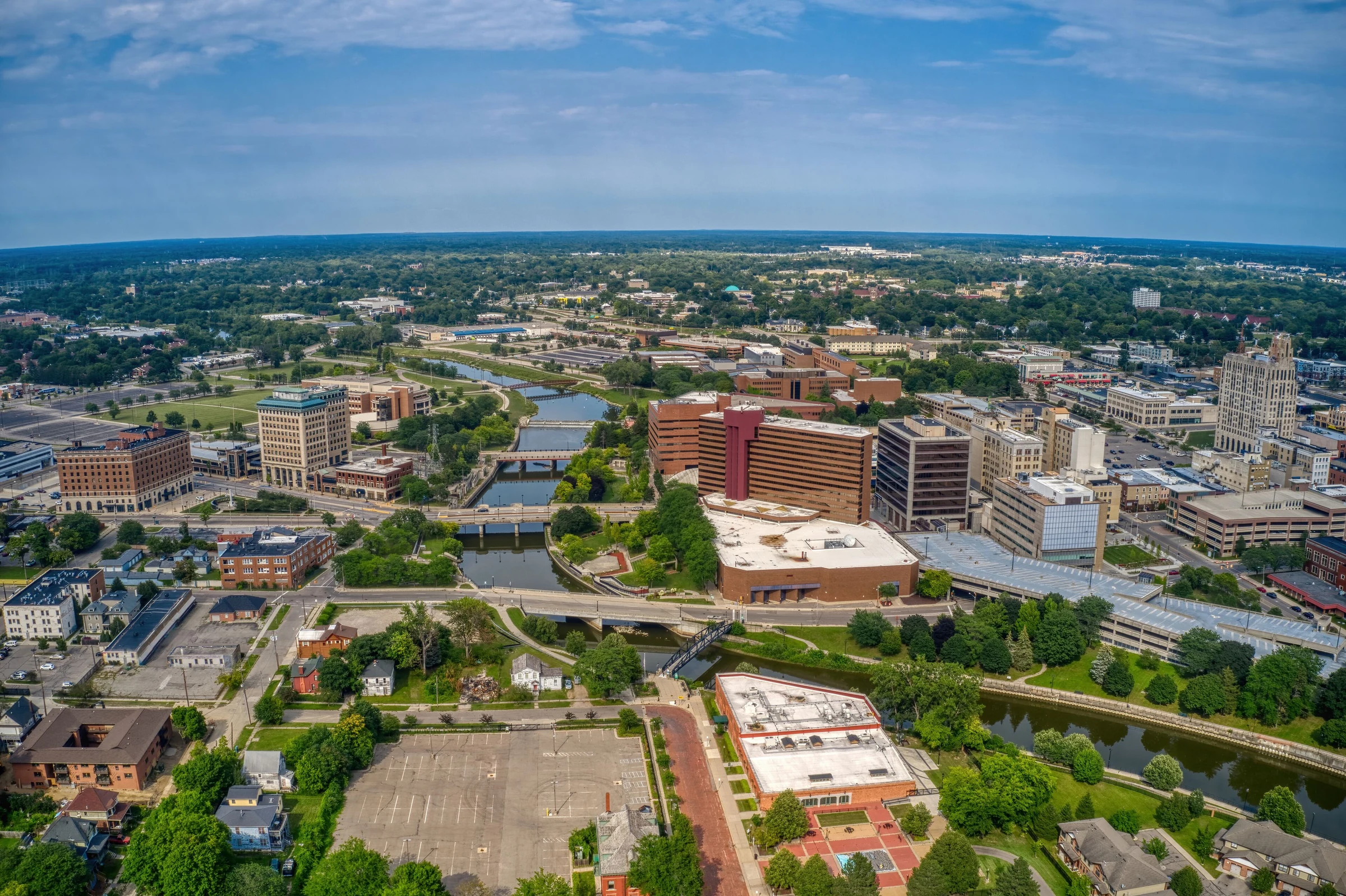
Commercial Roofing Contractors Flushing, MI
Commercial Roofers in Flushing
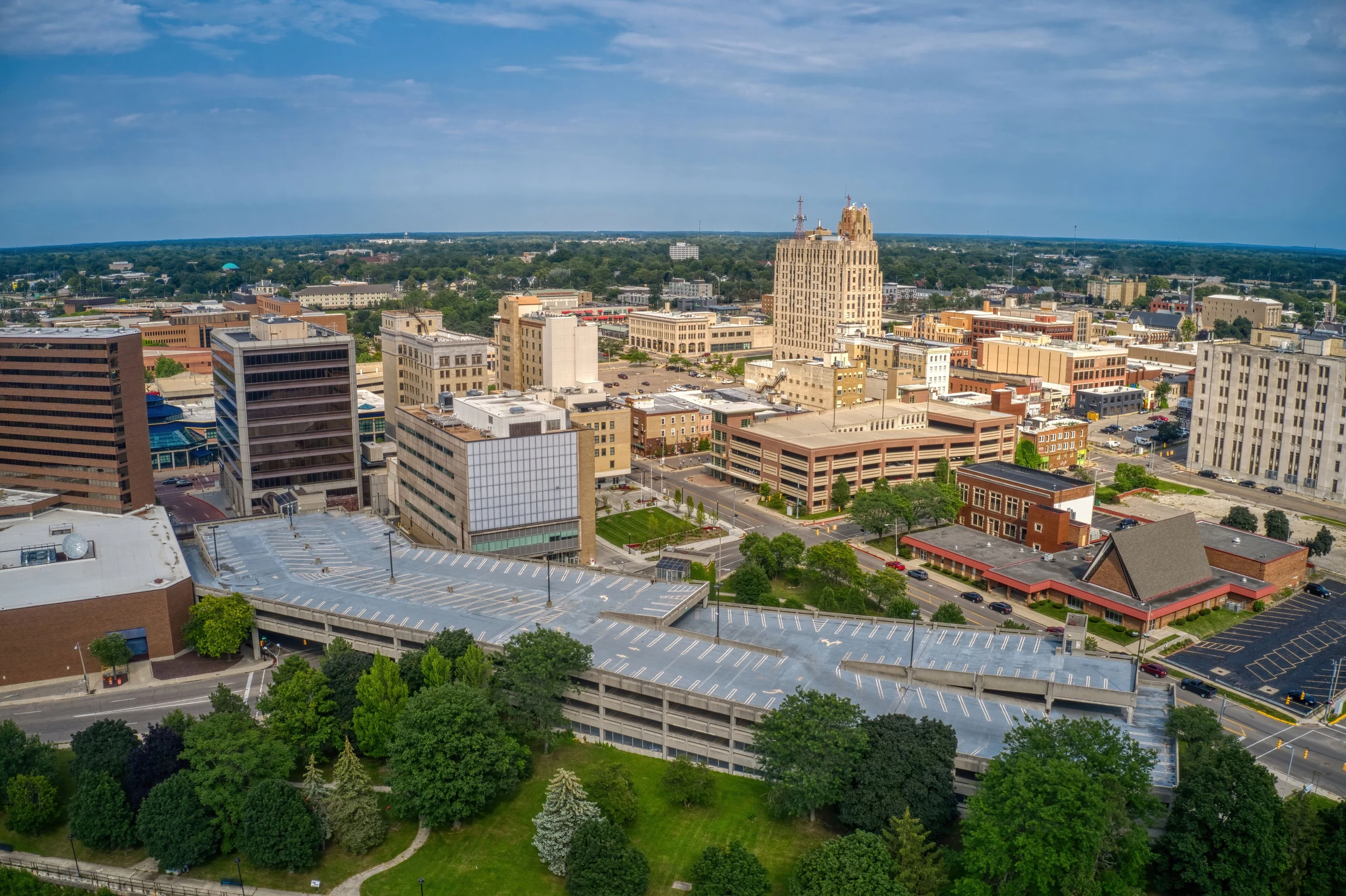
Commercial roofers serving Flushing should document leak sources, wet insulation, drainage, edge details, penetrations, and repair history before recommending a scope. Flushing's commercial roof stock centers on a compact downtown along the Flint River, brick storefronts and converted houses now running as professional offices, most of it built well before the roofing systems we install today existed. Small-town scale doesn't mean small-town risk; these roofs carry real consequences when they fail.
Main Street Storefronts
The retail buildings along Flushing's Main Street carry decades of roof history layered on top of each other, older built-up roofing recovered as needed rather than on any fixed schedule, with newer single-ply sections patched in wherever a prior owner replaced a failing area. That layered history means two storefronts sitting next to each other can have completely different roof ages and completely different problems, even though they look identical from the sidewalk.
Parapet walls tie these buildings together along the block, and roof drainage often routes through shared or adjacent systems between neighboring storefronts, which means a clogged drain or damaged scupper on one building's roof can back water up onto a neighbor's roof before anyone downstream notices. We check drainage paths across the full block section, beyond the specific building we're called out to, whenever we inspect a Main Street storefront.
Roof access on Main Street is its own challenge. Buildings share party walls and sit close enough to the sidewalk that a lift or crane often has to stage from a rear alley or an adjacent parking area rather than the street itself. We plan access before scheduling any tear-off, since a plan that works on paper can fall apart quickly on a block this tight.
Converted Homes Now Running as Professional Offices
A number of Flushing's law offices, dental practices, and small professional firms operate out of older residential structures converted to commercial use, often with a low-slope roof addition built over what used to be a porch, garage, or rear addition. These converted sections rarely match the pitch and drainage design of the original house roof, and that mismatch is where we find the most consistent leaks: water running off a steeper original roof line onto a lower-slope addition that wasn't sized to handle the added volume.
A number of these conversions also predate any formal permitting record for the roof addition itself, which means we sometimes can't confirm exactly when the low-slope section was built or to what standard. In those cases we treat the addition as an unknown quantity and inspect it more thoroughly than we would a documented roof.
Because these buildings run one tenant, sometimes one owner-operator, decisions move fast once we've identified the problem. There's no property management layer or multi-tenant lease structure to work through, just a straightforward conversation with the person who owns the practice.
The Flint River and Flushing County Park
Flushing sits along the Flint River, with Flushing County Park along the water serving as one of the area's more recognizable green spaces. Buildings closer to the river corridor can see complicated site drainage during spring runoff, and while that's mostly a civil-engineering concern rather than a roofing one, it does factor into how we plan discharge points for any roof drain that ties into a building's storm system near the water.
Freeze-Thaw and Seasonal Roof Stress
Every roof in Flushing deals with the same Genesee County winter pattern: freeze-thaw cycling that works on old flashing and mortar joints, ice damming at parapets and roof-to-addition transitions, and spring runoff that tests whatever drainage capacity the building actually has. Summer thunderstorms bring hail risk that can bruise aging membrane on Main Street roofs that haven't been recovered in years, and those older sections are where we focus our post-storm inspections first.
A typical Flushing roof inspection covers:
- Layered roof-age mapping across adjoining Main Street storefronts
- Shared drainage tracing across neighboring buildings on the same block
- Pitch and drainage mismatch at converted-home roof additions
- Parapet and flashing condition on older masonry buildings
- Storm system discharge planning for buildings near the river
- Storm and hail damage documented by roof section
- Prior patch and recover history where records exist
Repair Decisions on a Century-Old Building
An older Main Street or converted-house roof rarely gives a clean repair-versus-replace answer on the first visit. We separate the roof into its original sections and any later additions, assess each on its own condition, and price the honest scope rather than bundling everything into one large recover when only part of the roof actually needs it.
Questions Flushing Building Owners Ask Us
Why does my neighbor's clogged drain affect my roof?
Adjoining storefronts on the same block often share or route through connected drainage systems. A blockage upstream can back water onto a downstream roof before it shows up as a visible problem there.
My office used to be a house. Why does the addition leak but the main roof doesn't?
Low-slope additions built over a porch or garage often weren't sized to handle runoff from the steeper original roofline above them. That mismatch is the most common leak source we find on converted homes.
How do you price a repair on a roof with several different sections and ages?
We assess each section on its own condition rather than quoting the whole roof as one age and price. That usually means a smaller, more accurate scope than a blanket recover.
Does being close to the Flint River affect roof drainage planning?
It can affect where storm discharge ultimately goes during spring runoff, which we account for when planning any drain that ties into the building's storm system.
How fast can repair work happen on a single-tenant professional office?
Usually quickly. Without a multi-tenant lease structure to coordinate, we can move from inspection findings to a scheduled repair as soon as the owner has a workable window.
Related
Ready to review the roof scope?
Let’s Talk About Your Commercial Roof
Share the building, roof history, known leaks or damage, access constraints, and schedule. We’ll start with the roof condition and the facility below it.