
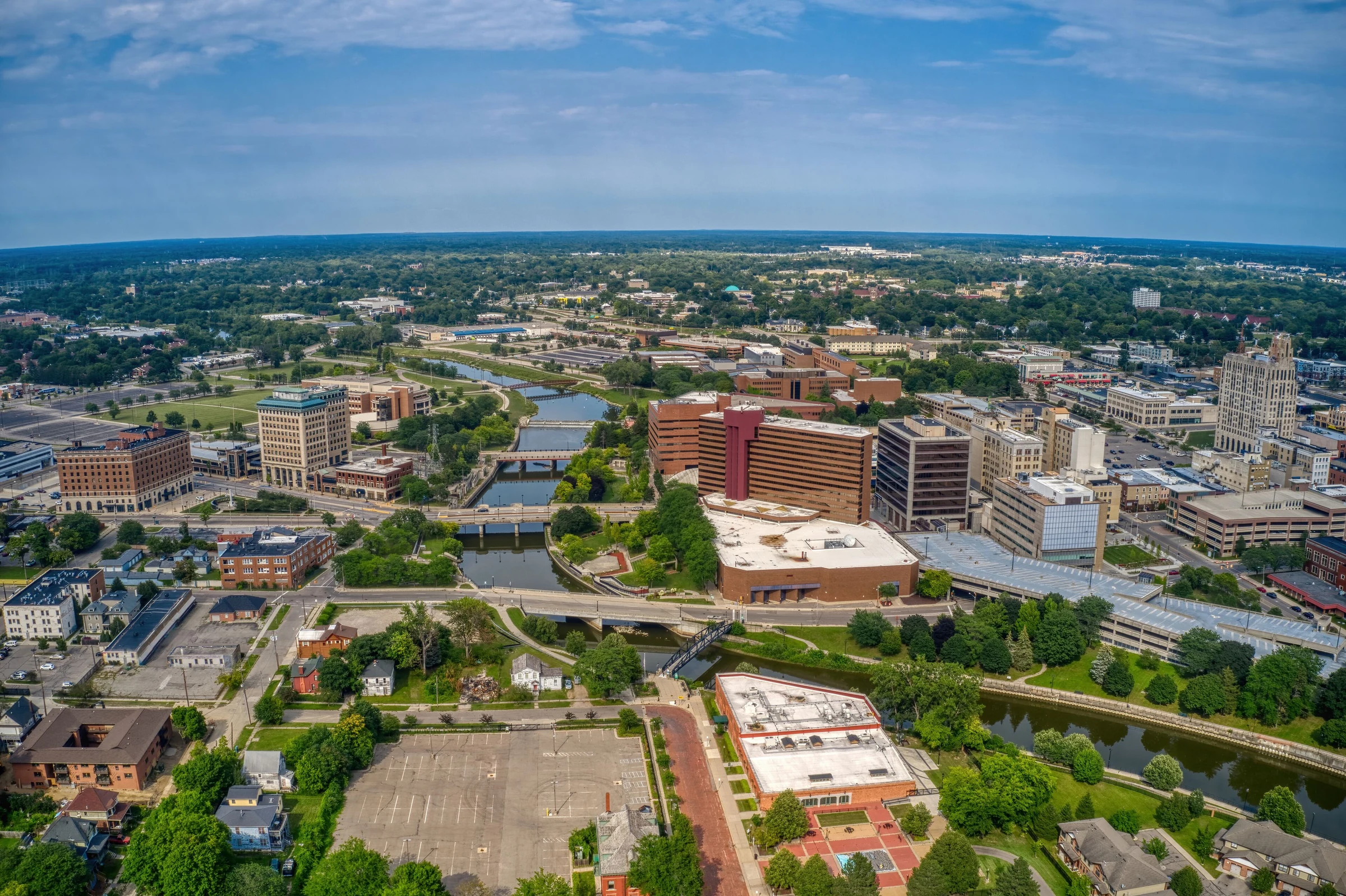
Commercial Roofing Contractors Beecher, MI
Commercial Roofers in Beecher, MI
Commercial roofing in Beecher, MI should begin with a documented assessment of membrane condition, seams, flashings, drainage, penetrations, and moisture before repair, coating, or replacement is selected. Beecher is an unincorporated community on Flint's north side that developed alongside the auto plants that once anchored the area, and the small commercial strips, churches, and schools that came with that era are still what make up its roof stock. Much of it is older than average, and much of it has been carrying deferred maintenance longer than most owners want to admit.
Commercial Strips Along Saginaw and Coldwater
The small commercial strips along Beecher's main corridors are mostly single-story retail and service buildings from the mid-twentieth century, with flat built-up or modified-bitumen roofs that have seen multiple ownership changes and, in some cases, long stretches with no roof maintenance at all. Ponding water and cracked, alligatored surfacing are common on roofs that have gone years between inspections.
We treat a first visit to one of these buildings as a full condition assessment rather than a quick patch call, because a roof with this kind of history usually has more than one problem even when the owner only called about the one leak they can see.
A lot of these strips also sit on smaller, independently owned parcels rather than one shopping-center ownership group, which means decisions on shared drainage or a common roof edge can take longer to coordinate than they would on a single-owner property.
Storm History and Why Documentation Matters Here
Beecher has a well-known place in Michigan storm history, the 1953 tornado that struck the area remains one of the deadliest in U.S. history, and while that event is decades past, it is part of why storm awareness runs deep in this community. Wind and hail events still track through north Flint and Genesee Township on a regular basis, and older roofs here take that damage harder than newer construction elsewhere in the county.
We document every storm-related roof call carefully, photos, dated notes, and a scope that separates emergency dry-in from permanent repair, because insurance claims on older buildings with pre-existing wear draw more scrutiny, and a clear record protects the owner.
Schools and Churches Serving the Community
Beecher Community Schools and the churches throughout the area carry large roof areas relative to the surrounding commercial stock, and many of those buildings have additions from different decades tied together at parapets and transitions that were not always detailed to match. Those seams are where we find most active leaks.
We schedule work around class schedules and services, and we prioritize buildings with active leaks over ones with cosmetic wear, since a school or sanctuary roof failure has consequences beyond the building itself.
Congregation size and school enrollment in this community have shifted over the years, and some buildings are carrying more roof area than their current use fully needs. That gap sometimes opens the door to a simpler repair scope, focused on the sections still in active use, rather than a full-roof commitment.
What We Prioritize on a Beecher Roof Assessment
Given how much deferred maintenance we see in this community, a Beecher roof walk usually starts with the same checklist:
- Active leaks and interior damage first
- Layer count and deck moisture on older built-up roofs
- Drainage capacity relative to current roof condition
- Flashing at every parapet, curb, and transition
- Storm damage documentation for insurance purposes
- A realistic repair-versus-replace timeline based on remaining roof life
That order matters. Stopping active water first buys time to plan the rest of the work properly instead of rushing a bigger decision under pressure.
Planning Repairs Around a Tight Budget
Many Beecher building owners are working with tighter capital budgets than owners elsewhere in the Flint area, which changes how we present options. Instead of one number for a full replacement, we break the scope into what needs to happen now to stop water intrusion, what can be scheduled over the next year, and what is a longer-term capital item.
That approach lets an owner keep a building dry and operating without committing to spending they cannot plan for on short notice.
We also flag when a repair is likely to be a stopgap rather than a real fix, since an owner working on a tight budget deserves to know upfront if they are buying a year of dry roof or five.
Beecher Roofing Questions We Get Often
What if a roof has gone years without any maintenance?
We start with a full assessment rather than assuming the visible leak is the only problem. Roofs with a long gap in maintenance usually have more going on than what shows up inside.
Does deferred maintenance affect an insurance claim after a storm?
It can. Adjusters look at pre-existing condition, which is why we document baseline roof condition as clearly as the storm damage itself.
Can repairs be phased instead of done all at once?
Yes, when the roof allows it. We prioritize active leaks first and schedule less urgent work around what an owner's budget can absorb.
How do older parapet and transition details affect leak risk?
Buildings with additions from different eras often have mismatched flashing details at those seams, which is where we find most leaks start, regardless of how the main field of the roof looks.
Do you work with property owners who are not on-site regularly?
Yes. We document conditions thoroughly with photos and written notes so an owner who cannot walk the roof themselves still has a clear picture of what is happening up there.
Related
Ready to review the roof scope?
Let’s Talk About Your Commercial Roof
Share the building, roof history, known leaks or damage, access constraints, and schedule. We’ll start with the roof condition and the facility below it.