
Grocery Store Roofing in Flint, MI
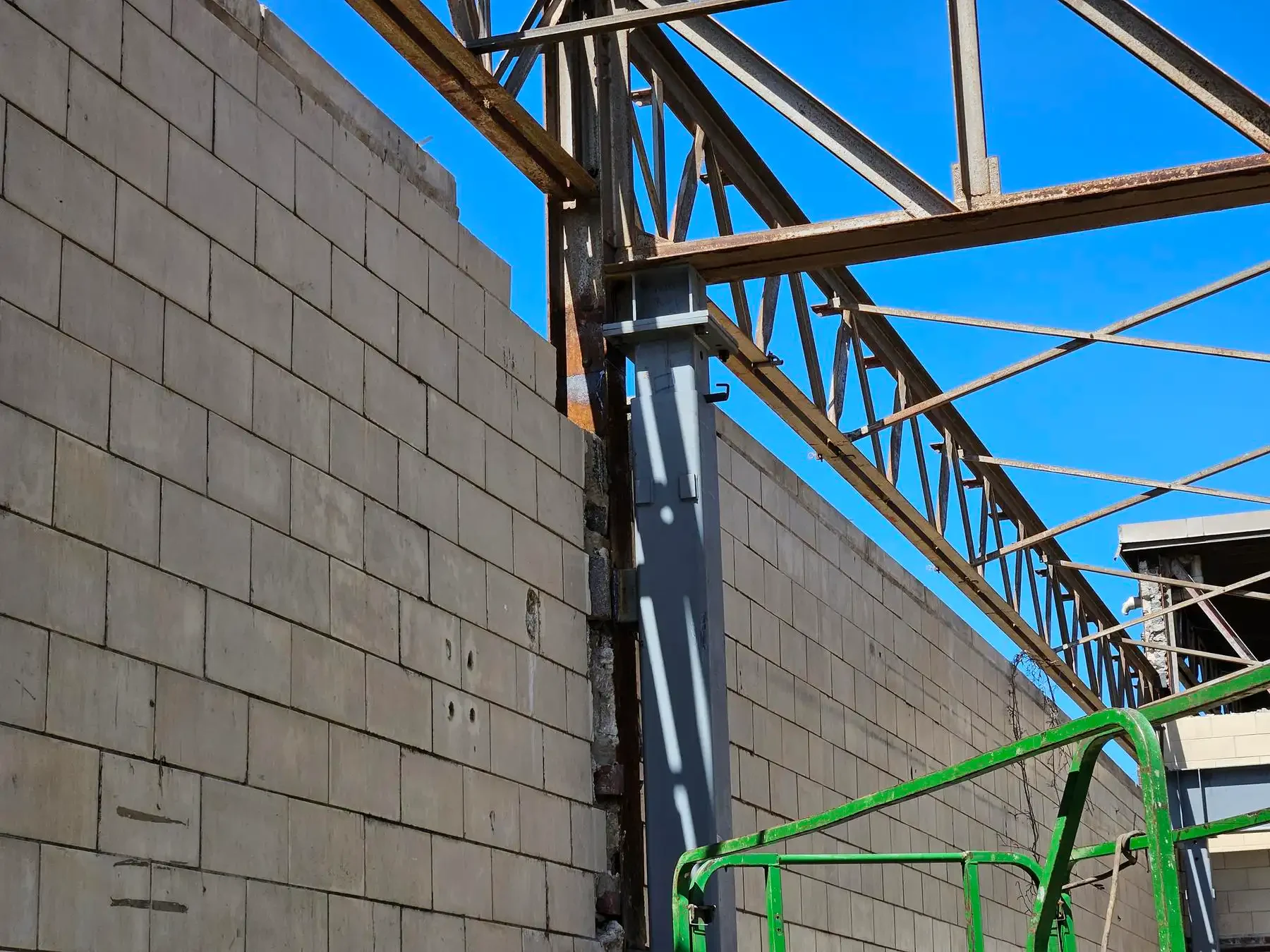
Roofing for Flint-Area Grocery and Supermarket Buildings
Grocery stores along Miller Road, Corunna Road, and the retail corridors through Fenton, Grand Blanc, and Davison carry some of the heaviest and most sensitive rooftop equipment loads of any retail building type we work on. Refrigeration condensers, bakery and deli exhaust, and HVAC tuned for produce and dairy sections all sit on a roof that has to keep working every single day the store is open, which for most grocery locations is every day, period.
Refrigeration Equipment Is the Roof's Real Load
Walk-in cooler and freezer condensing units are the heaviest and most consequential equipment on a grocery store roof, both structurally and in terms of what happens if their curbs fail. These units vibrate constantly during operation, which wears at curb seals and fasteners in ways that static HVAC equipment doesn't, and a failed seal around a refrigeration curb can put water directly into ceiling space above coolers and freezers where a leak is especially hard to trace back to its source. We check refrigeration curbs specifically on every grocery inspection, as a standalone item rather than folding it into a general equipment walk.
Some stores add or upgrade refrigeration capacity over the years as product mix changes, and each addition means another curb, another set of fasteners, and another point where the original roof assembly gets modified by a refrigeration contractor working independently of whoever installed the membrane. We treat every refrigeration curb as its own inspection item for that reason, regardless of how long ago it was installed.
A Grocery Leak Is a Food-Safety Problem Before It's a Facilities One
Water intrusion over a sales floor lined with packaged food, or worse, over open produce, bakery, or deli cases, creates a food-safety issue on top of the facilities issue. A store may need to pull product, rope off an aisle, or notify a health inspector depending on how and where water gets in, none of which a grocery operator wants to deal with during business hours. We prioritize grocery leak calls accordingly and scope temporary protection that accounts for what's actually stocked below a given roof section, rather than the square footage affected alone.
Store managers dealing with a health inspection on an unrelated matter don't need a roof leak complicating that visit, and we've found grocery clients specifically value a documented, dated repair record they can point to if a leak ever becomes part of a broader inspection conversation. We leave that kind of paper trail as a matter of routine on every grocery call, not only on the larger claims.
What We Check on Grocery Store Roofs
- Refrigeration and freezer condenser curb seals and vibration isolation
- Bakery, deli, and prepared-foods exhaust penetrations
- HVAC zoning serving produce, dairy, and frozen sections separately
- Loading dock and receiving area roof sections, which see heavier structural loading from truck traffic below
- Drain capacity relative to a large, low-slope membrane area
- Condensation-related deck issues near refrigeration equipment
Bakery, Deli, and Prepared Foods Exhaust
Exhaust penetrations from in-store bakeries, delis, and prepared foods sections carry grease and moisture that degrade standard flashing faster than typical HVAC exhaust, similar to what we see on school cafeteria roofs but often with more equipment and higher volume given a grocery store's operating hours. We flash these penetrations with materials suited for that exposure and treat them as a standalone inspection item, since they're a recurring source of leaks that show up as ceiling stains near the prepared foods area long before anyone traces it back to the roof.
Rooftop condensate lines running from refrigeration units to a drain also deserve their own check, since a disconnected or frozen condensate line can dump water onto the membrane in a concentrated spot rather than distributing it the way rainfall does, which sometimes produces localized damage that doesn't match the pattern of a typical weather-related leak.
Working Around a Store That Never Fully Closes
Most grocery stores in this market run long hours with limited overnight closure windows, which means roof work has to be planned around receiving schedules, stocking crews, and whatever overnight window the store actually has rather than a standard business-hours assumption. We coordinate directly with store management on delivery schedules especially, since blocking loading dock access even temporarily can disrupt a store's entire receiving operation for perishables that can't sit on a truck.
Grocery Facilities Managers Ask Us
Can you service refrigeration curbs without shutting down the units?
In most cases, yes, though any work directly on a curb requires close coordination with your refrigeration contractor to avoid disrupting cooling to the cases below.
How do you handle a leak near produce or a deli case?
We treat it as urgent given the food-safety implications, and we scope temporary protection based on what's actually stocked in that section, rather than the square footage of the leak alone.
Do you work around our overnight receiving schedule?
Yes. We coordinate timing with your store manager around delivery windows so loading dock access isn't disrupted during active receiving.
What causes recurring leaks near our bakery or deli exhaust?
Grease and moisture exposure degrade standard flashing faster in those areas. We use materials suited for that exposure and treat those penetrations as a standalone repair item.
Can you inspect refrigeration curb seals as part of a routine roof inspection?
Yes, that's a standard part of any grocery store inspection we perform, since those seals wear differently than static rooftop equipment.
Related
Ready to review the roof scope?

Let’s Talk About Your Commercial Roof
Share the building, roof history, known leaks or damage, access constraints, and schedule. We’ll start with the roof condition and the facility below it.