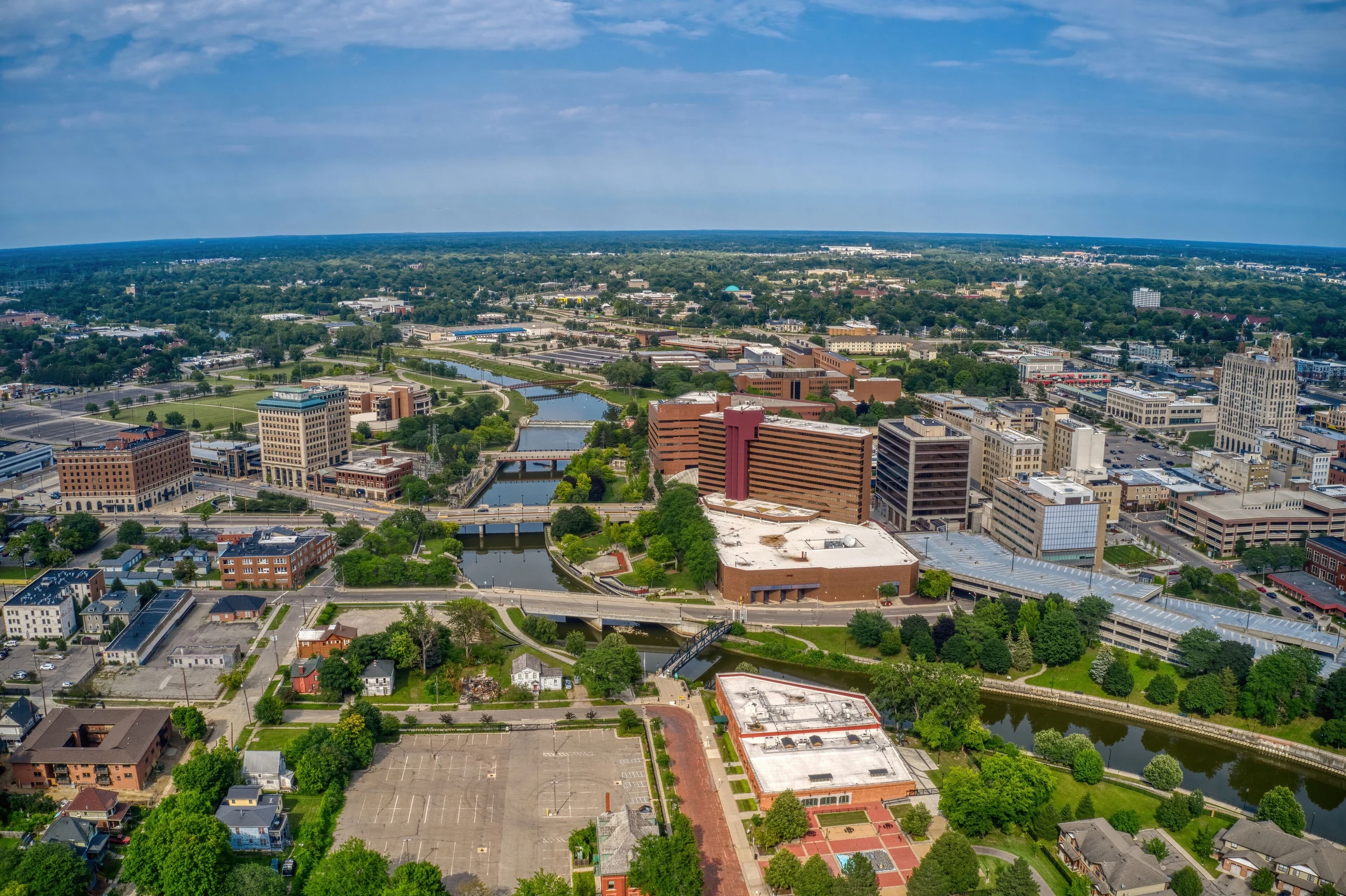

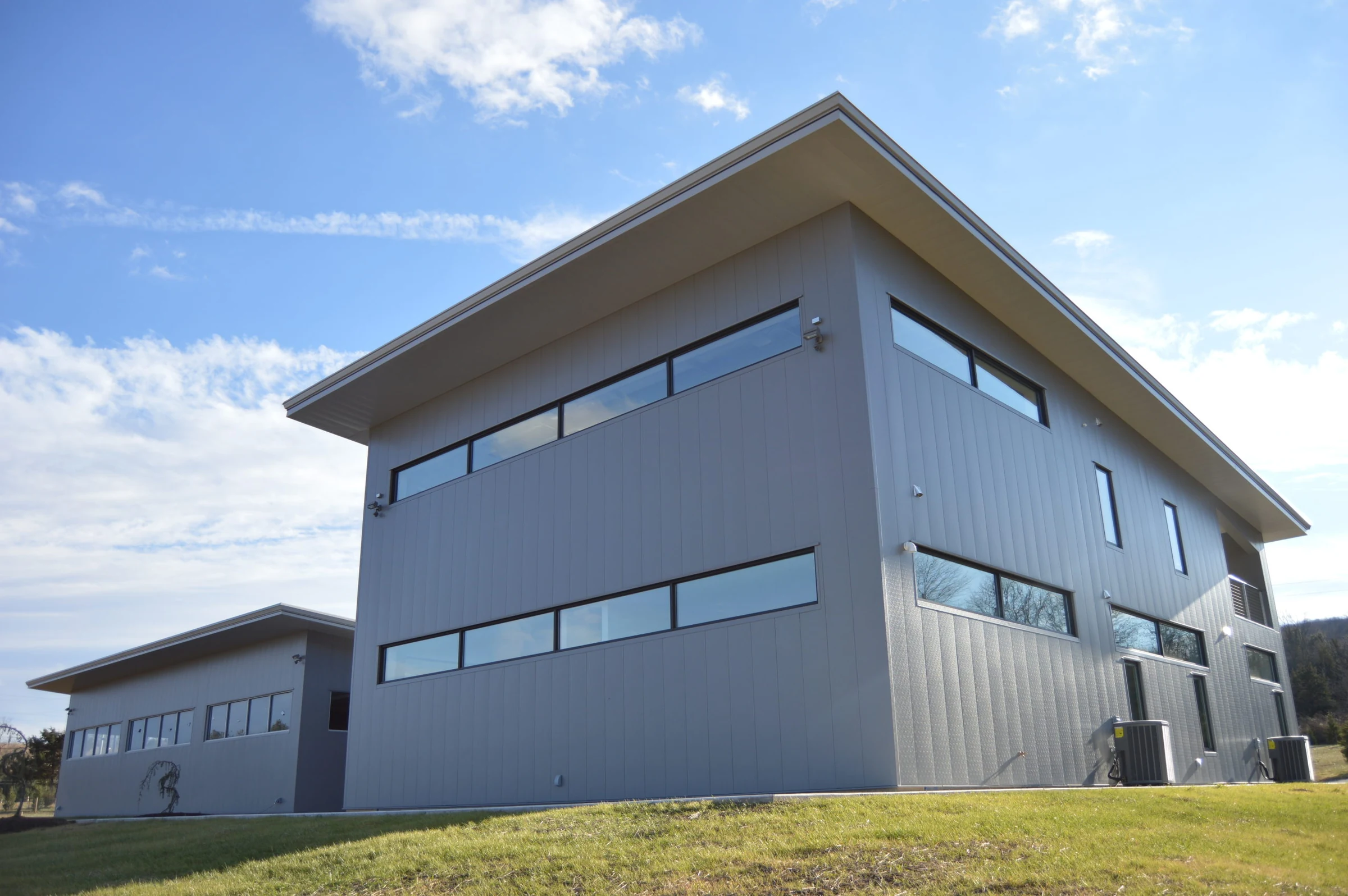
Metal R-Panel Roofing in Flint, MI
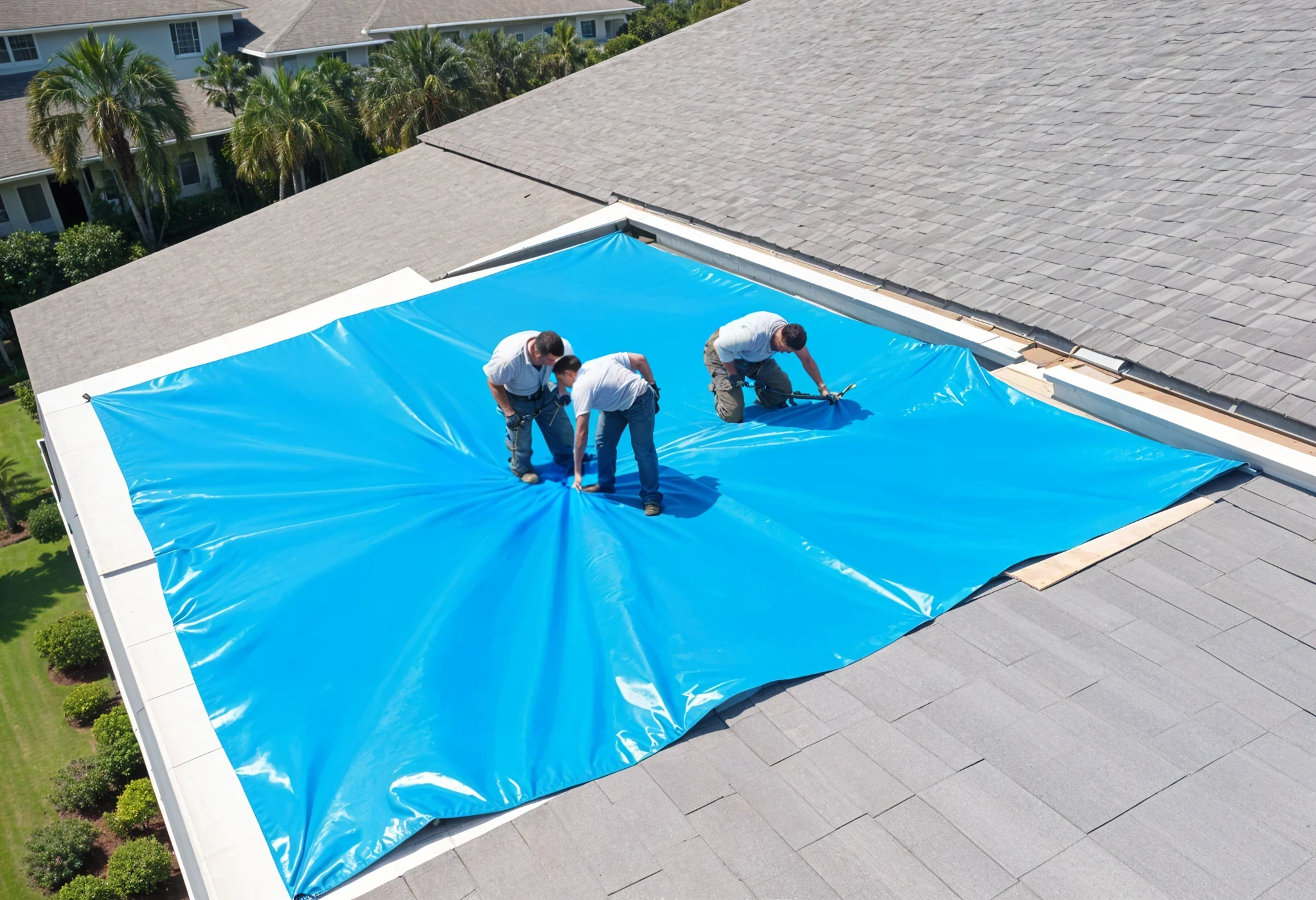
R-Panel Metal Roofs on Flint's Industrial Buildings
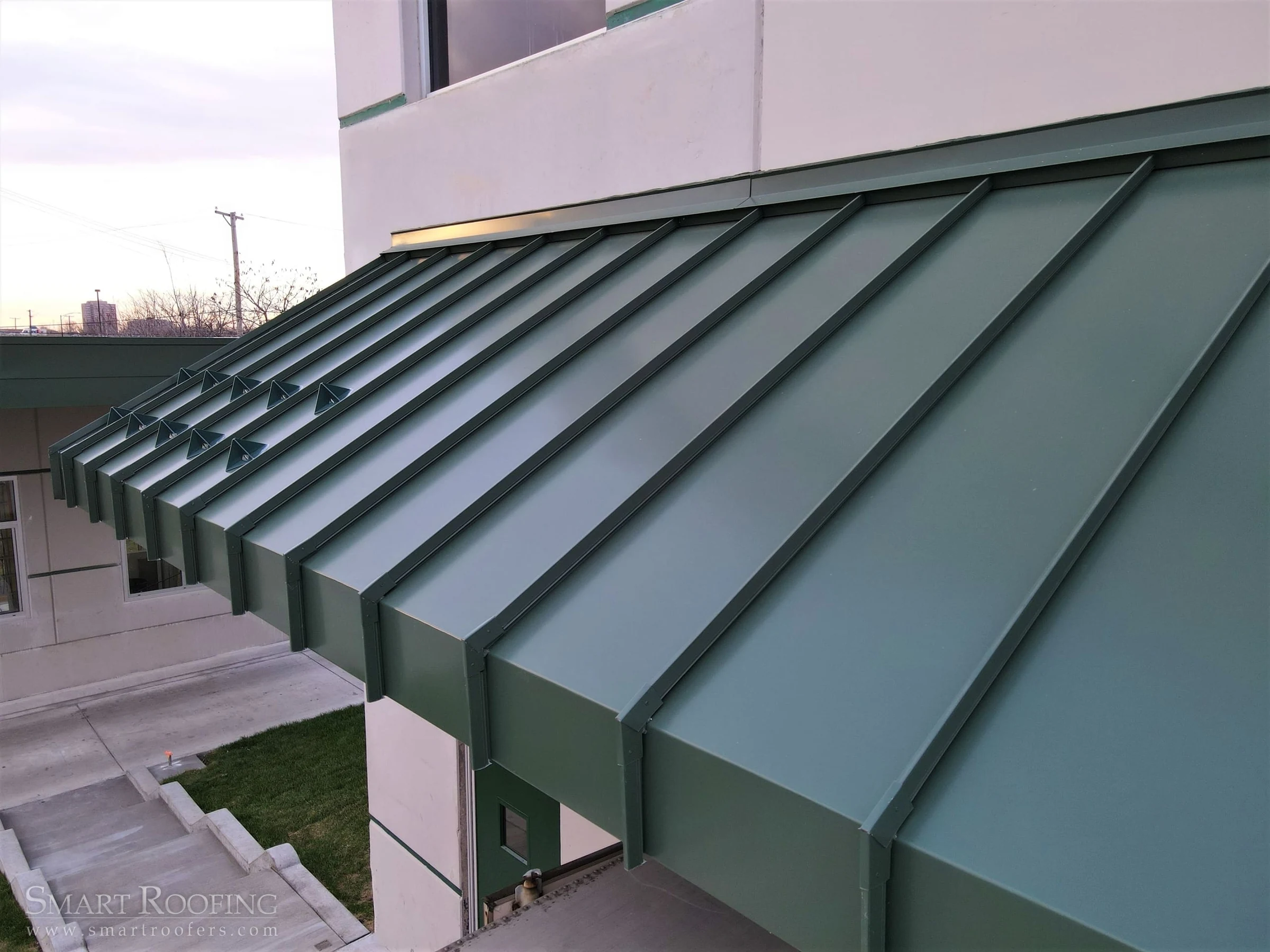
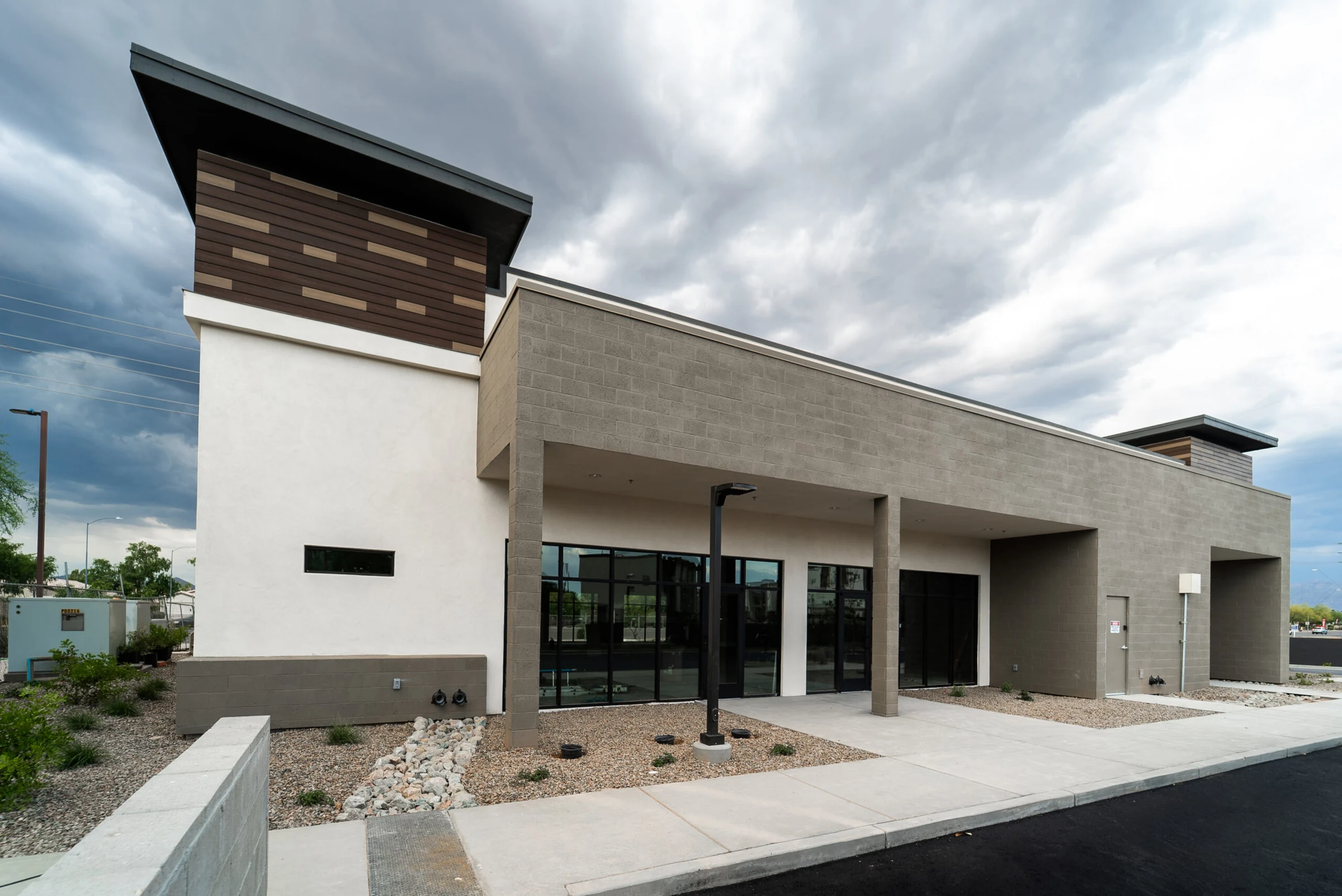
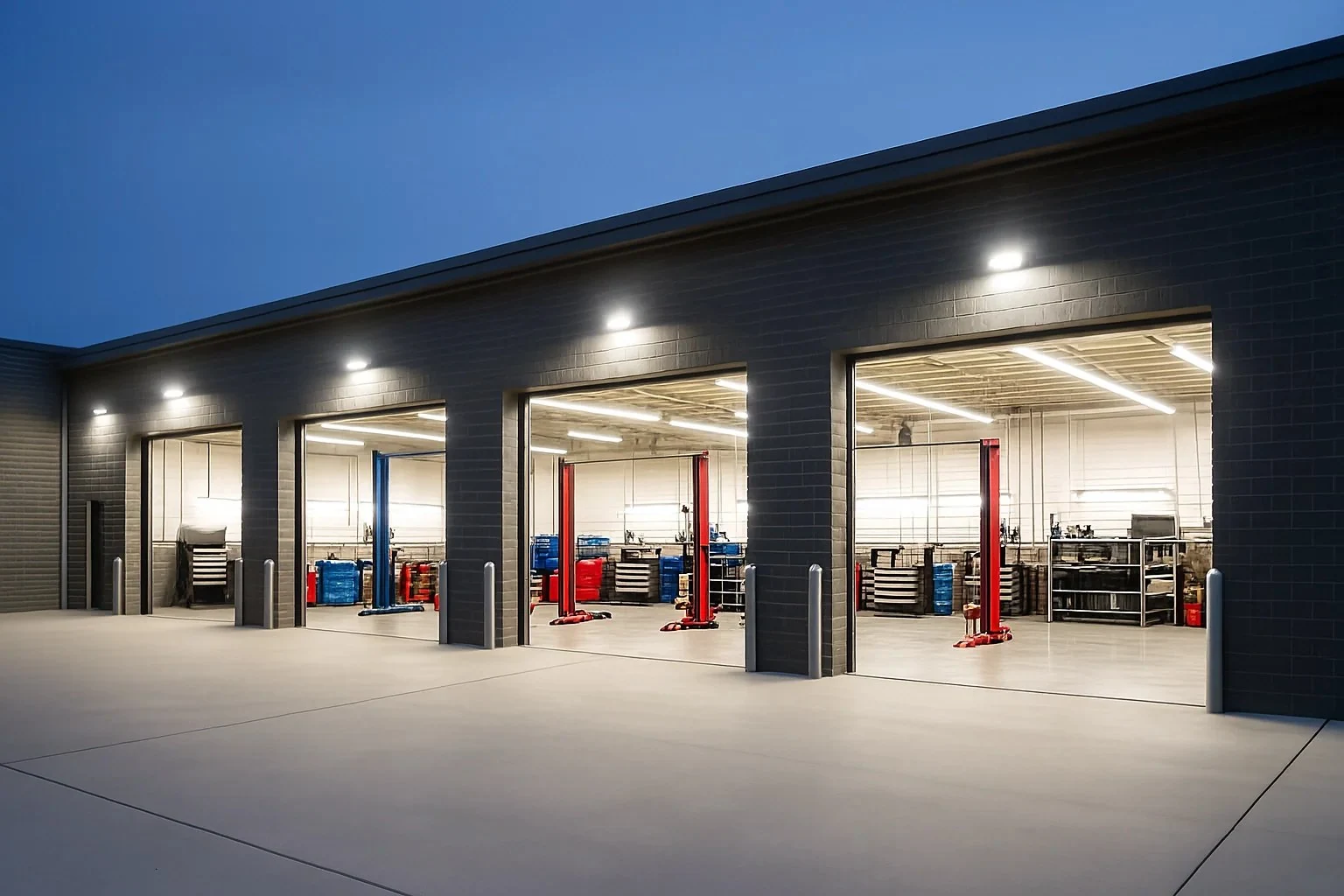
Exposed-fastener R-panel metal roofing covers a lot of the pre-engineered industrial buildings scattered through Burton, Genesee Township, and Mount Morris Township — simple metal building shells built for warehousing, light manufacturing, and equipment storage. It's an economical system for that building type, and most of our R-panel work is fastener maintenance, seam sealant renewal, and targeted repair on roofs that are still structurally sound but showing their age.
Why R-Panel Is Everywhere on Industrial Buildings Here
Pre-engineered metal buildings became the standard construction method for a lot of the warehouse and light-industrial space built along Genesee County's industrial corridors, and R-panel is the roofing system that pairs naturally with that construction type — simple trapezoidal ribbed panels, exposed fasteners driven through the panel face into purlins below. It's fast to install and inexpensive relative to concealed-fastener systems, which made it the default choice for a lot of buildings put up as production, storage, and distribution space over the decades.
The tradeoff for that cost advantage is maintenance. Exposed fasteners are the weak point in the system over time, and a roof that's gone fifteen or twenty years without fastener attention is usually leaking somewhere, even if the panels themselves are structurally sound.
Fastener Backout Is the Number One Failure Mode
Every fastener penetration on an R-panel roof is a potential leak path, sealed originally by a rubber washer under the screw head. That washer degrades with UV exposure and repeated freeze-thaw movement, and the screw itself can back out slightly as the panel expands and contracts through Michigan's temperature swings. Once a washer fails or a fastener backs out even a small amount, water finds its way in during the next rain or snowmelt, often traveling along the purlin before showing up as an interior leak well away from the actual entry point.
We treat fastener condition as the primary inspection item on any R-panel roof, not an afterthought. On a roof with hundreds or thousands of exposed fasteners, a systematic fastener replacement or re-torque pass — sometimes called a "screw-down" — is often the single most cost-effective maintenance step available, catching failing washers before they become active leaks.
Seam and Lap Sealant in a Freeze-Thaw Climate
R-panel systems rely on sealant at side laps and end laps to keep water out where panels overlap. That sealant has a service life shorter than the metal panels themselves, and Genesee County's freeze-thaw cycling accelerates its breakdown — the same expansion and contraction that stresses fasteners also works on lap sealant, cracking and separating it faster than it would degrade in a milder climate. We check lap sealant condition on every R-panel inspection and factor sealant renewal into any maintenance program for these roofs.
Retrofitting Insulation Over an R-Panel Deck
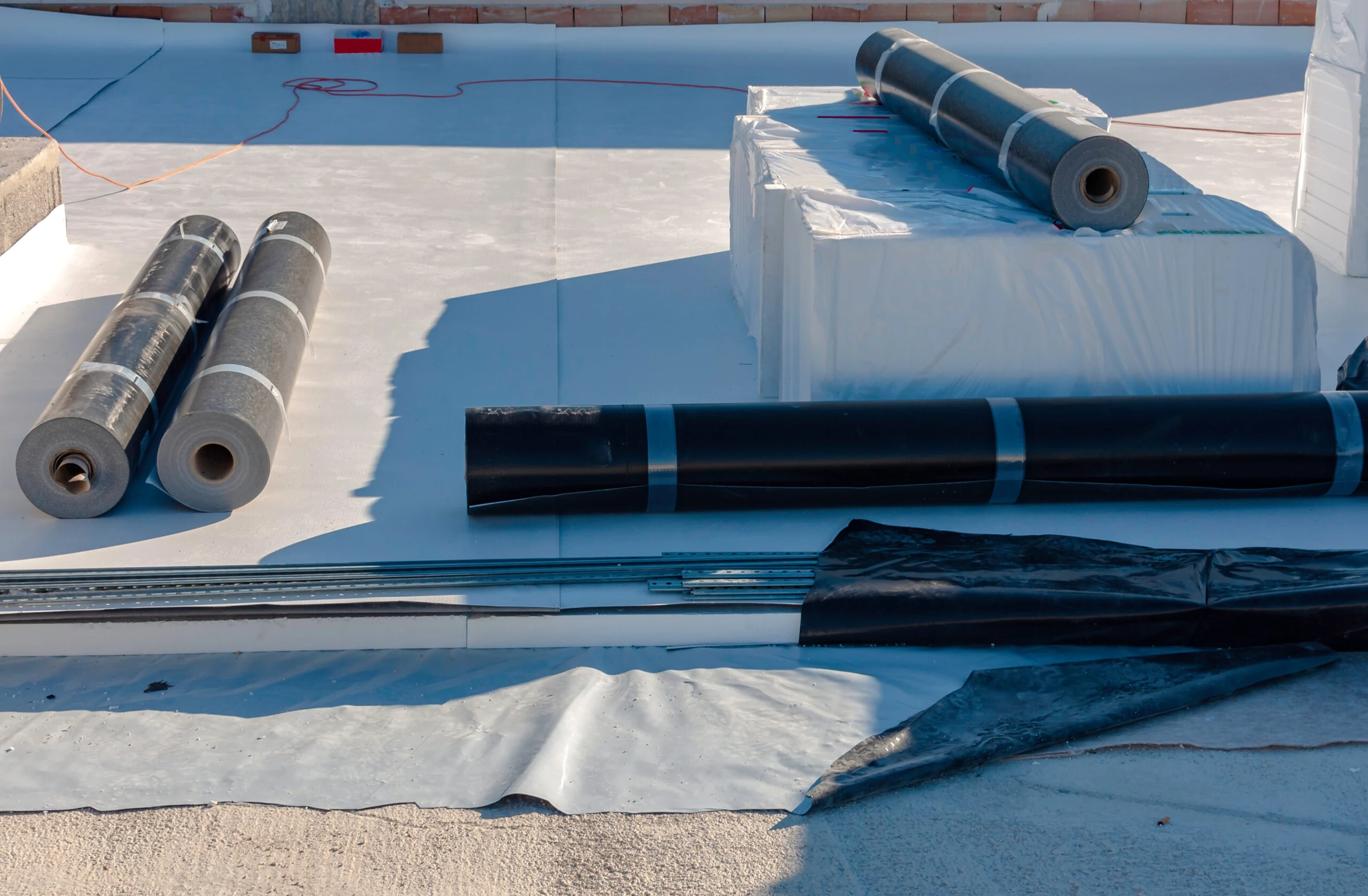
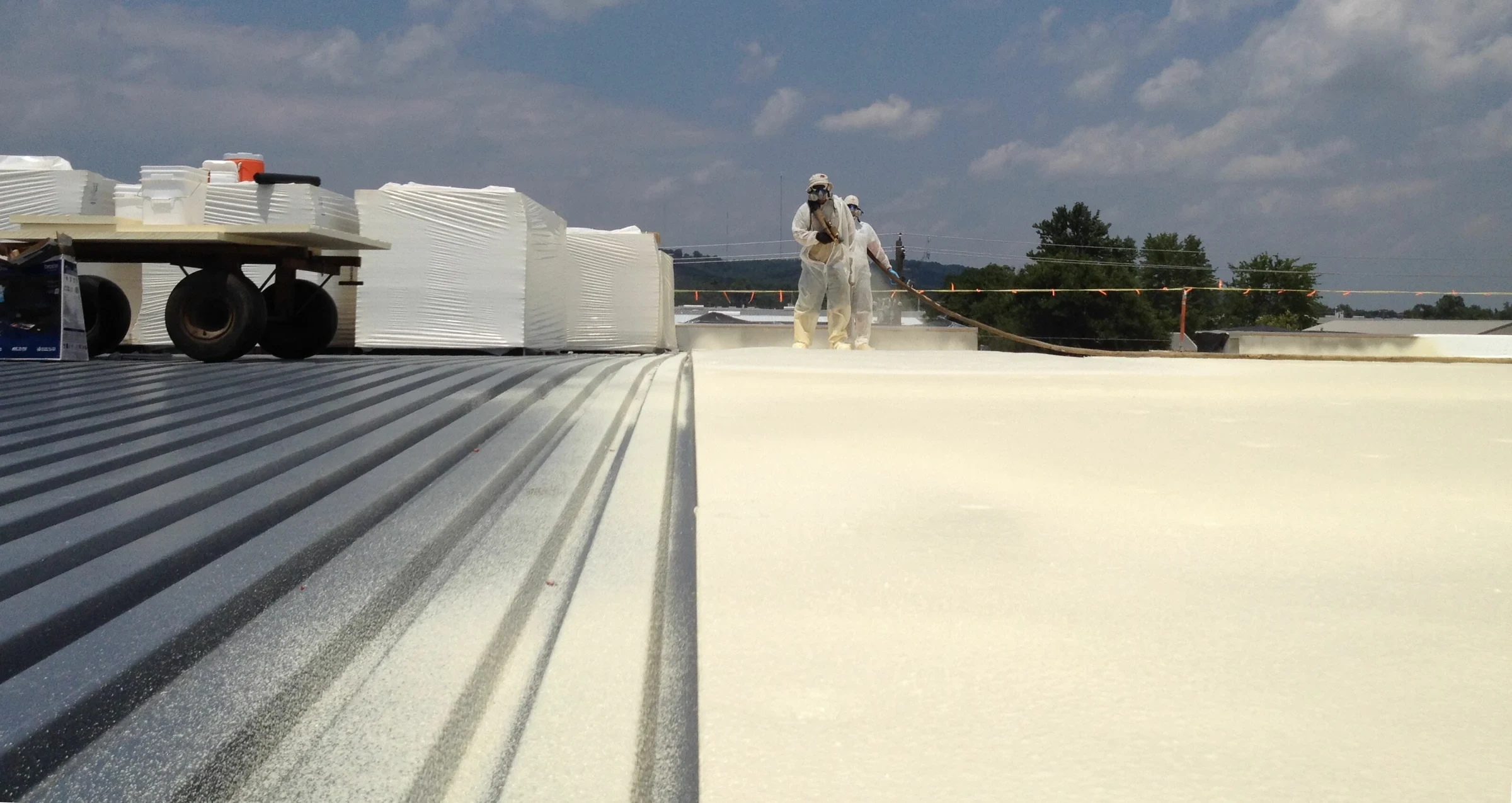
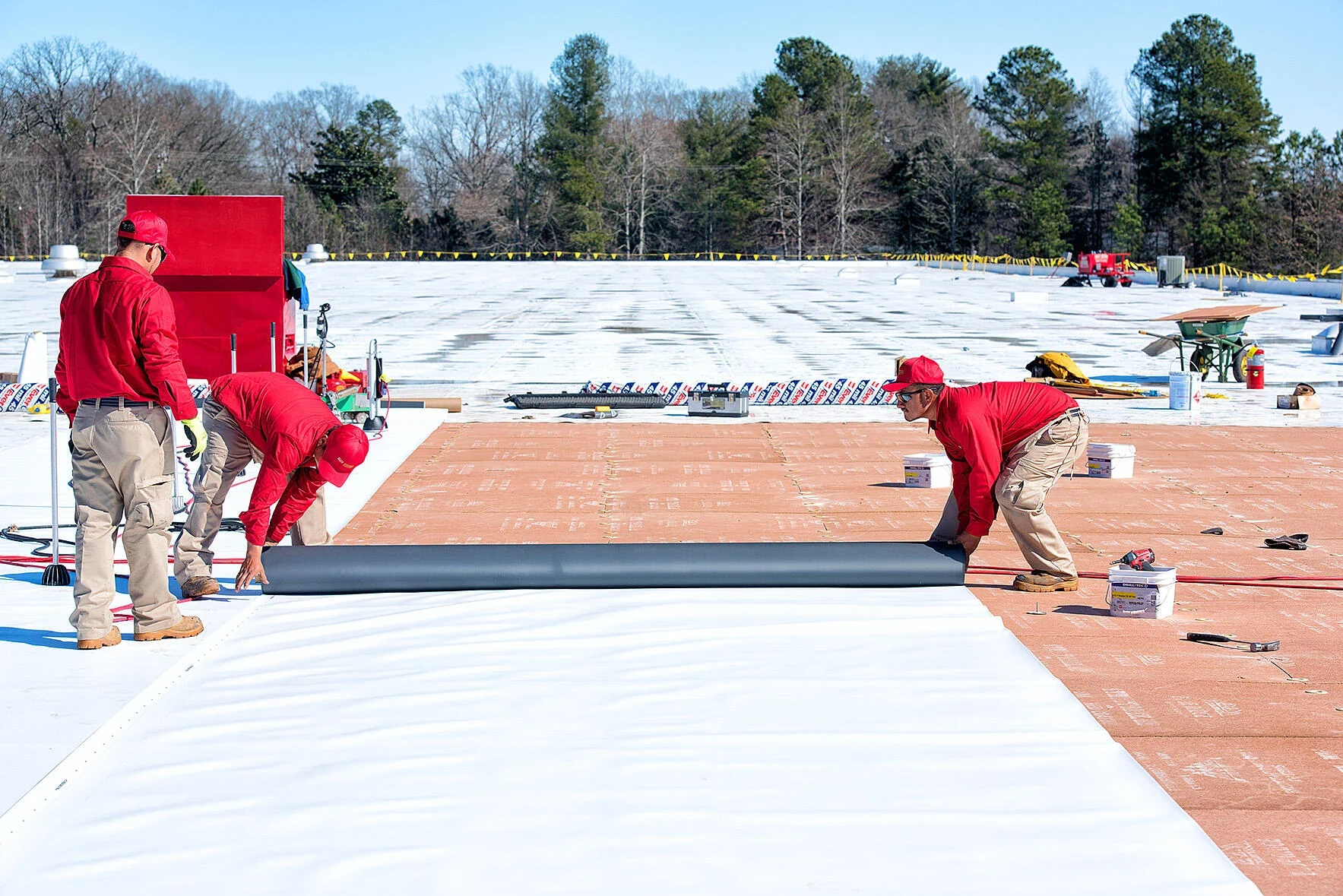
Many of the industrial buildings we work on around Genesee Township and Mount Morris Township were built with little or no roof insulation, since they went up as unconditioned production or storage space. As those buildings get repurposed for uses that need real climate control, adding a rigid insulation layer and a new weatherproof surface over the existing R-panel deck is often the most practical retrofit, instead of stripping the metal entirely. That approach keeps the structural panels in place while giving the building the thermal performance its current use actually requires, and it lets us correct low-slope areas where water has historically pooled against the panel ribs.
What We Check on an R-Panel Roof
- Fastener condition across representative panel sections, checking for backout and washer failure
- Lap sealant integrity at side laps and end laps
- Panel corrosion, especially at cut edges and around penetrations
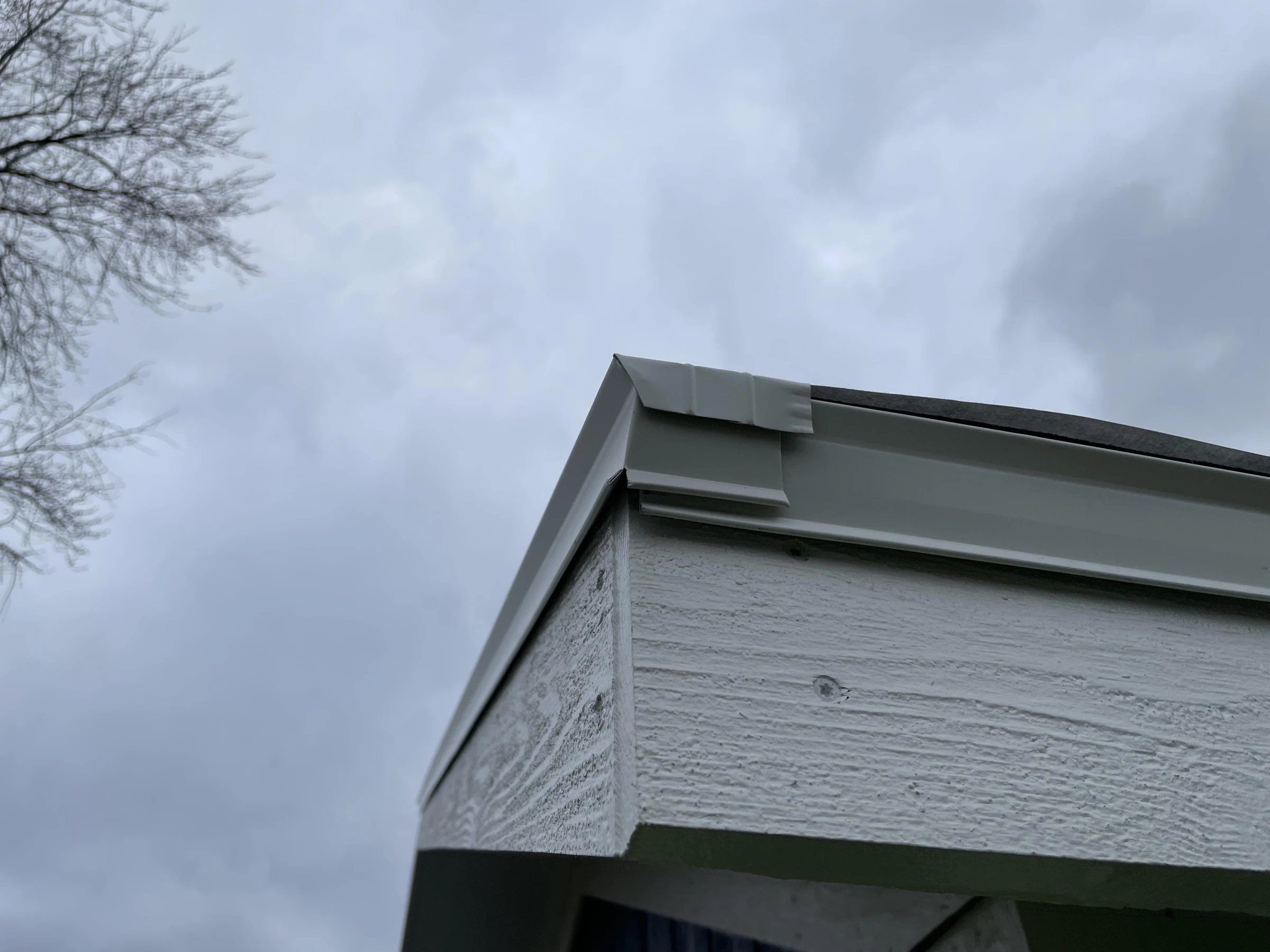
- Flashing condition at ridge, eave, and wall transitions
- Structural fastening at purlins where panels attach
- Ponding at low-slope transitions where R-panel meets flat roof sections
Maintenance, Recover, or Replacement
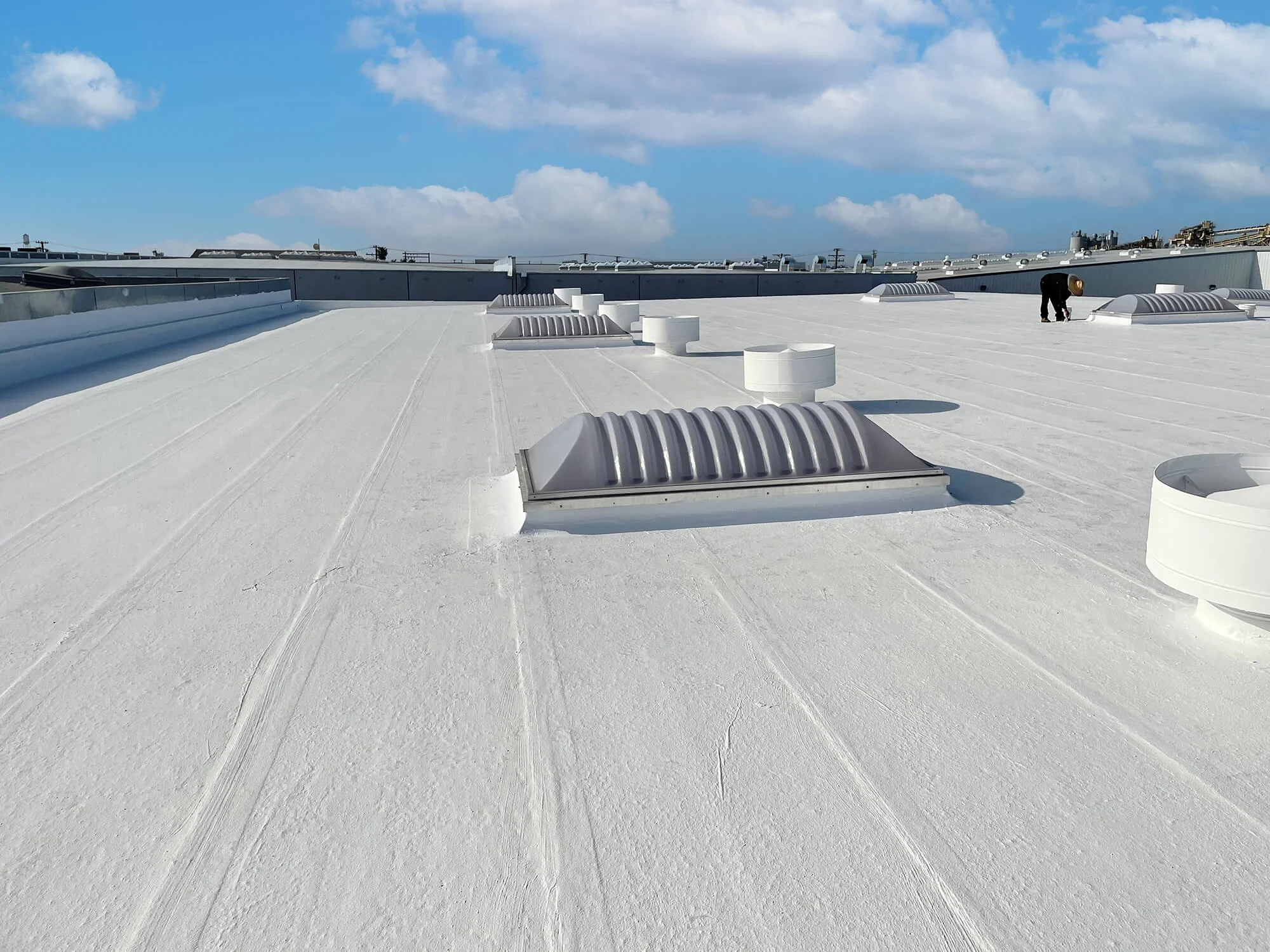
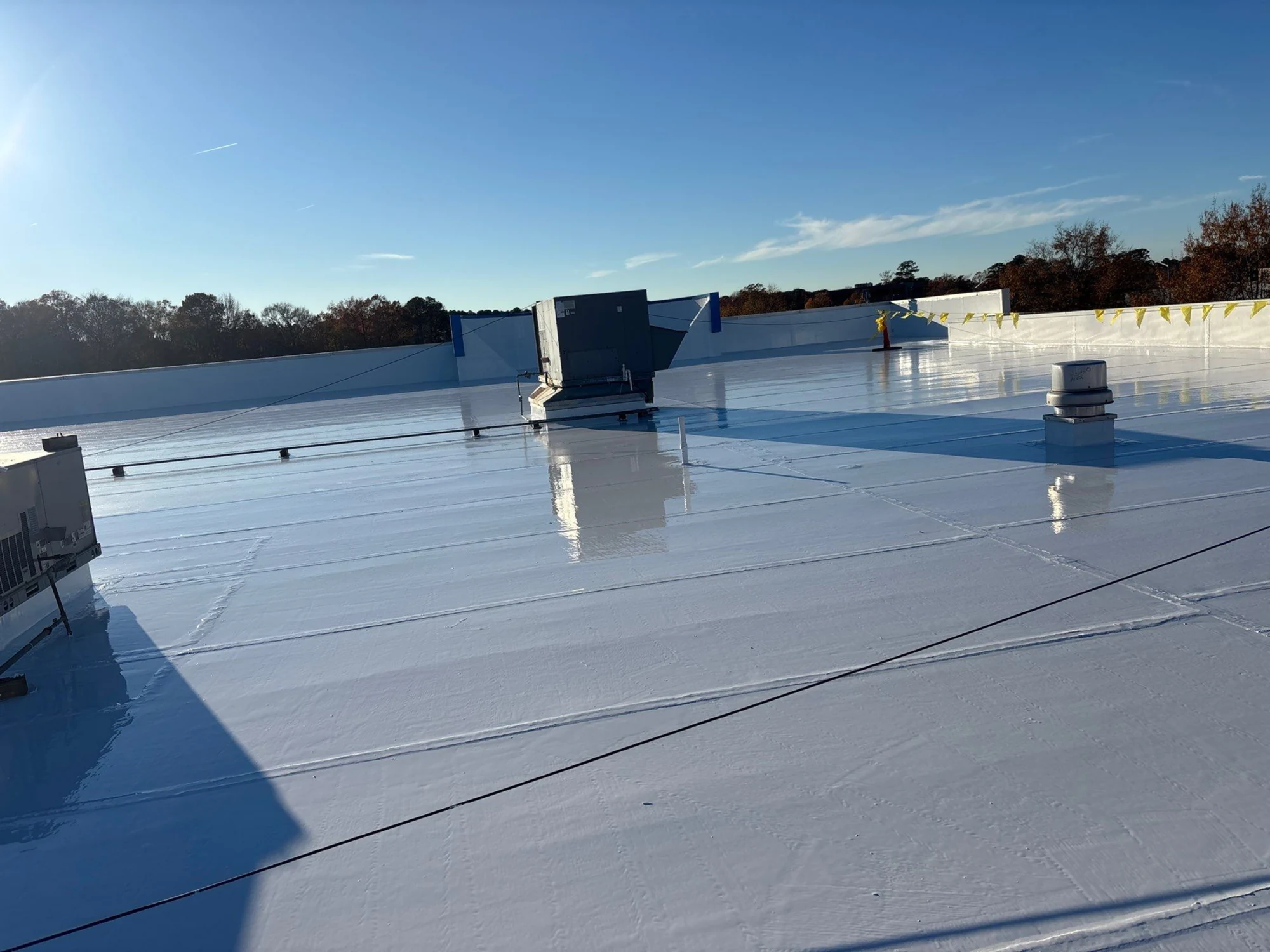
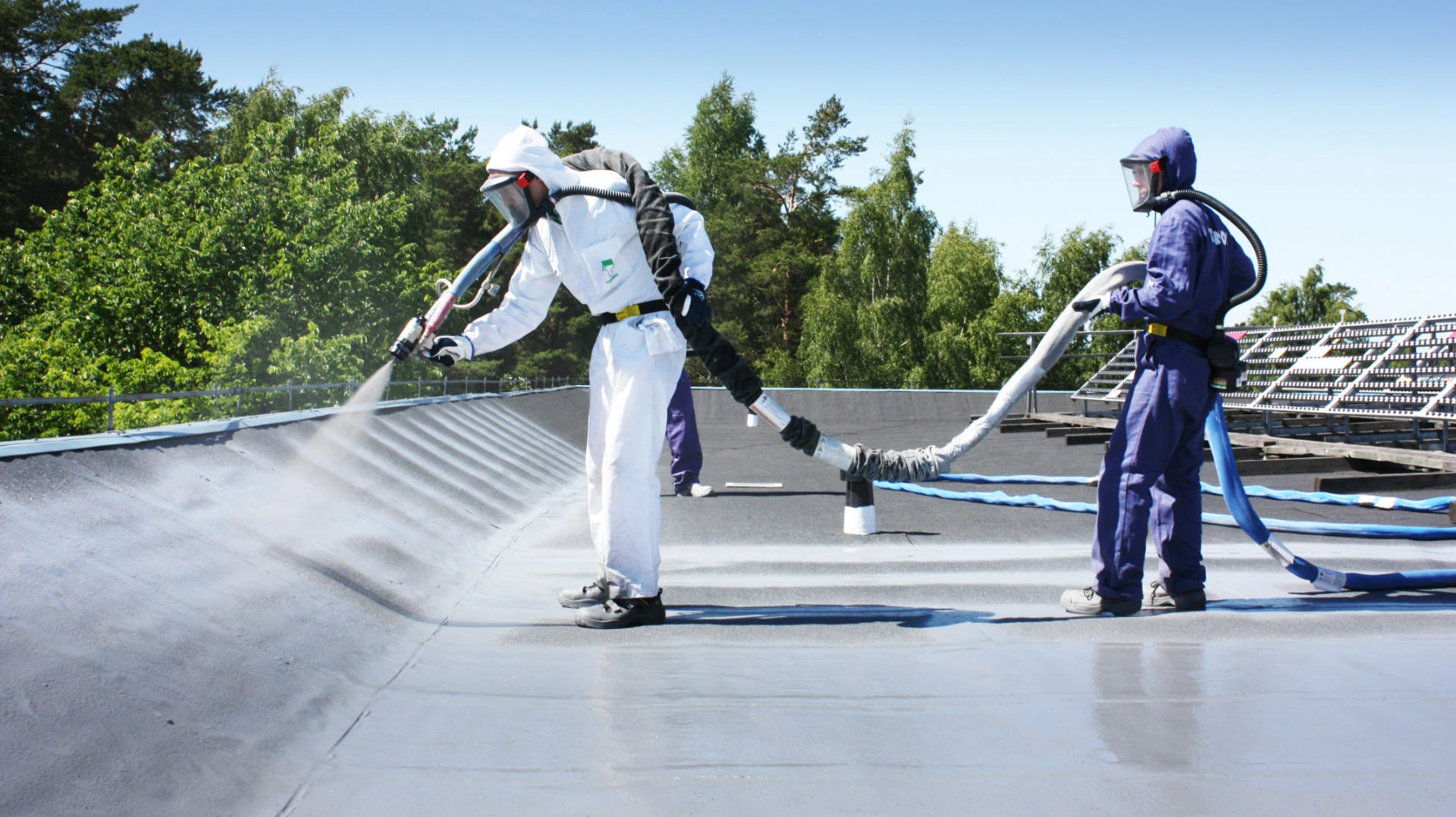
Most R-panel roofs in decent structural condition are strong candidates for a maintenance program — fastener replacement, sealant renewal, and targeted panel repair — rather than full replacement, since the panels themselves often outlast the fasteners and sealant holding them watertight. When a roof has widespread panel corrosion or has been through repeated leak cycles that have compromised the deck or purlins underneath, a recover system or full metal replacement becomes the more cost-effective long-term option. We also apply silicone coatings over structurally sound metal roofs in some cases, sealing fasteners and seams under a continuous membrane rather than servicing thousands of individual fastener points indefinitely.
Metal R-Panel Roofing Questions
How often do exposed fasteners need attention on an R-panel roof?
We generally recommend a fastener inspection every few years, with a full re-torque or replacement pass at the first sign of widespread washer failure, usually somewhere between year 10 and 15 depending on the original installation quality and sun exposure.
Can a leaking R-panel roof be fixed without replacing the panels?
Often yes. Most leaks on these roofs trace back to failed fasteners or lap sealant rather than damaged panels, and both are repairable without panel replacement in most cases.
Is a silicone coating a good option for an older R-panel roof?
For structurally sound panels with widespread fastener and seam wear, a coating system can seal the whole roof under one continuous membrane, which is often more cost-effective than an indefinite cycle of individual fastener repairs.
What causes rust on an R-panel roof and can it be stopped?
Rust typically starts where the protective coating has worn through, at cut edges, fastener penetrations, or areas of standing water. Catching it early with spot treatment and coating renewal prevents it from spreading into structural panel failure.
How do I know if my building needs a full metal roof replacement?
We look at panel corrosion extent, purlin and structural condition, and how many prior leak cycles the building has been through. Widespread structural corrosion is the main trigger for full replacement rather than continued repair.
Related
Ready to review the roof scope?
Let’s Talk About Your Commercial Roof
Share the building, roof history, known leaks or damage, access constraints, and schedule. We’ll start with the roof condition and the facility below it.