
Sika Sarnafil PVC Roof Systems in Flint, MI
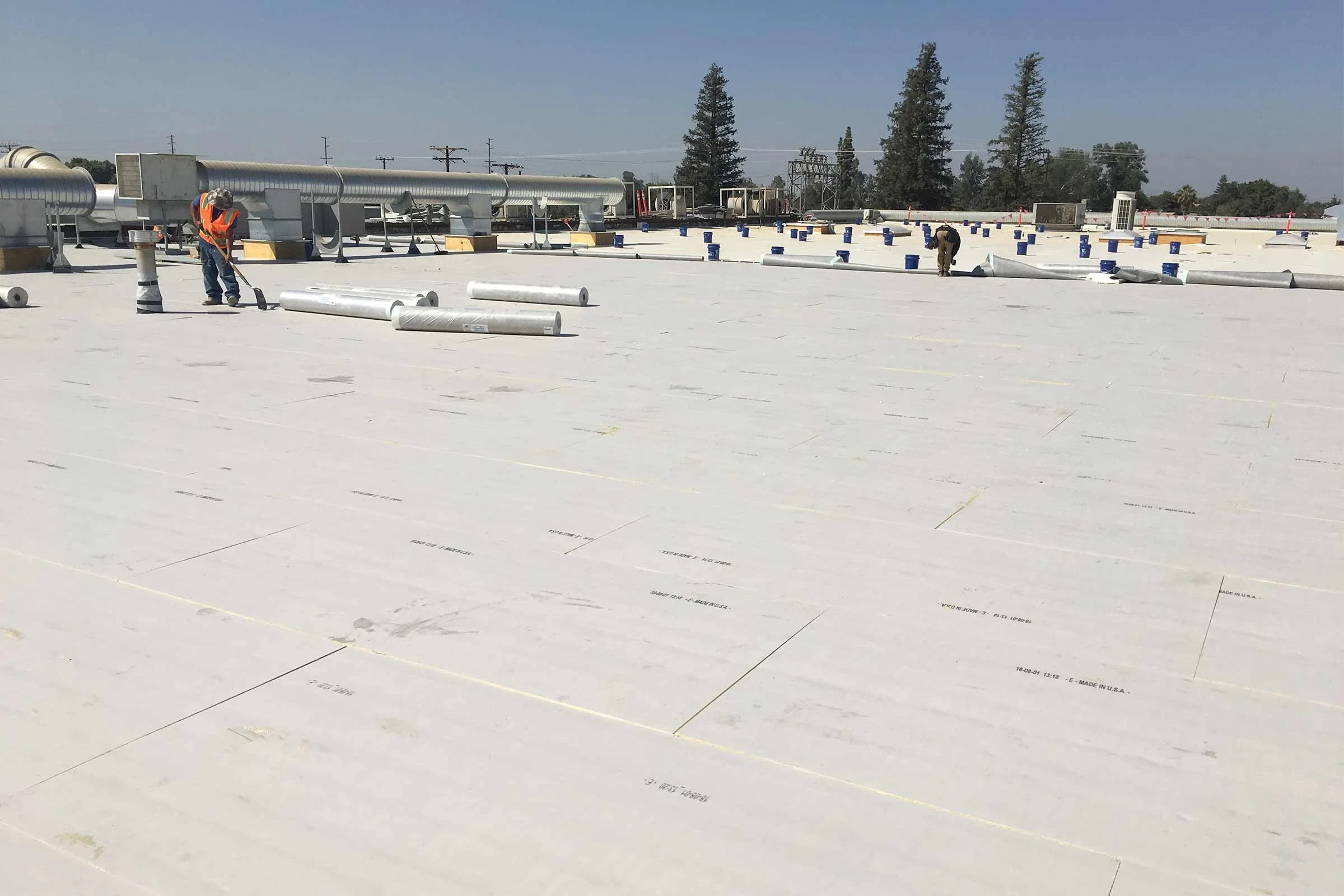
Sarnafil's PVC Focus on the Roofs That Need It Most
Sika Sarnafil has manufactured PVC roofing membrane for longer than most single-ply manufacturers have made any roofing product at all, and PVC remains the core of their commercial line. We reach for it specifically on the smaller share of Flint buildings where PVC's chemical resistance or flashing flexibility is the actual driver.
A Manufacturer Centered on One Membrane Chemistry
Unlike manufacturers offering EPDM, TPO, and PVC across a broad catalog, Sarnafil's commercial roofing business centers on PVC and related polymer-modified membranes. That focus shows up in the depth of their PVC product range, standard and reinforced sheet, multiple thicknesses, and accessories built specifically around PVC's welding and flashing characteristics rather than adapted from another membrane type.
It's a narrower catalog than some of the multi-membrane manufacturers offer, which is exactly why we reach for it only when a project's chemical exposure or flashing complexity actually calls for PVC specifically, rather than treating it as a general-purpose default.
Where That Focus Matters on a Flint Roof
PVC's chemical resistance is the main reason we specify it at all, restaurant exhaust exposure, converted industrial space with residual grease or solvent contact, and roofs with complex flashing where PVC's heat-welded flexibility at corners and penetrations is genuinely useful. Sarnafil's product depth in that specific membrane type gives us more options within PVC itself, thickness, reinforcement, color, than a manufacturer offering PVC as one line among several.
We come across that exposure most on converted spaces within the older industrial corridors, buildings that once housed auto-parts manufacturing and now carry a mix of tenants, some of whom run processes that put real chemical residue into the rooftop environment even decades after the original heavy industry moved out.
Reinforced Membrane for Complex Detail Work
Sarnafil's reinforced PVC sheet adds a scrim layer that increases puncture and tear resistance, useful on roofs with a lot of foot traffic or complex flashing geometry where the membrane sees more mechanical stress at corners and terminations than a typical open field. We evaluate reinforced versus standard sheet based on the specific traffic and detail complexity of each roof rather than defaulting to one across every job.
Older buildings with multiple additions bolted onto the original structure over the decades tend to generate exactly this kind of complex flashing geometry, valleys, offset roof heights, and transition curbs where reinforced sheet earns its added cost more than it would on a simple rectangular roof.
Cold-Weather Welding Practice on Sarnafil PVC
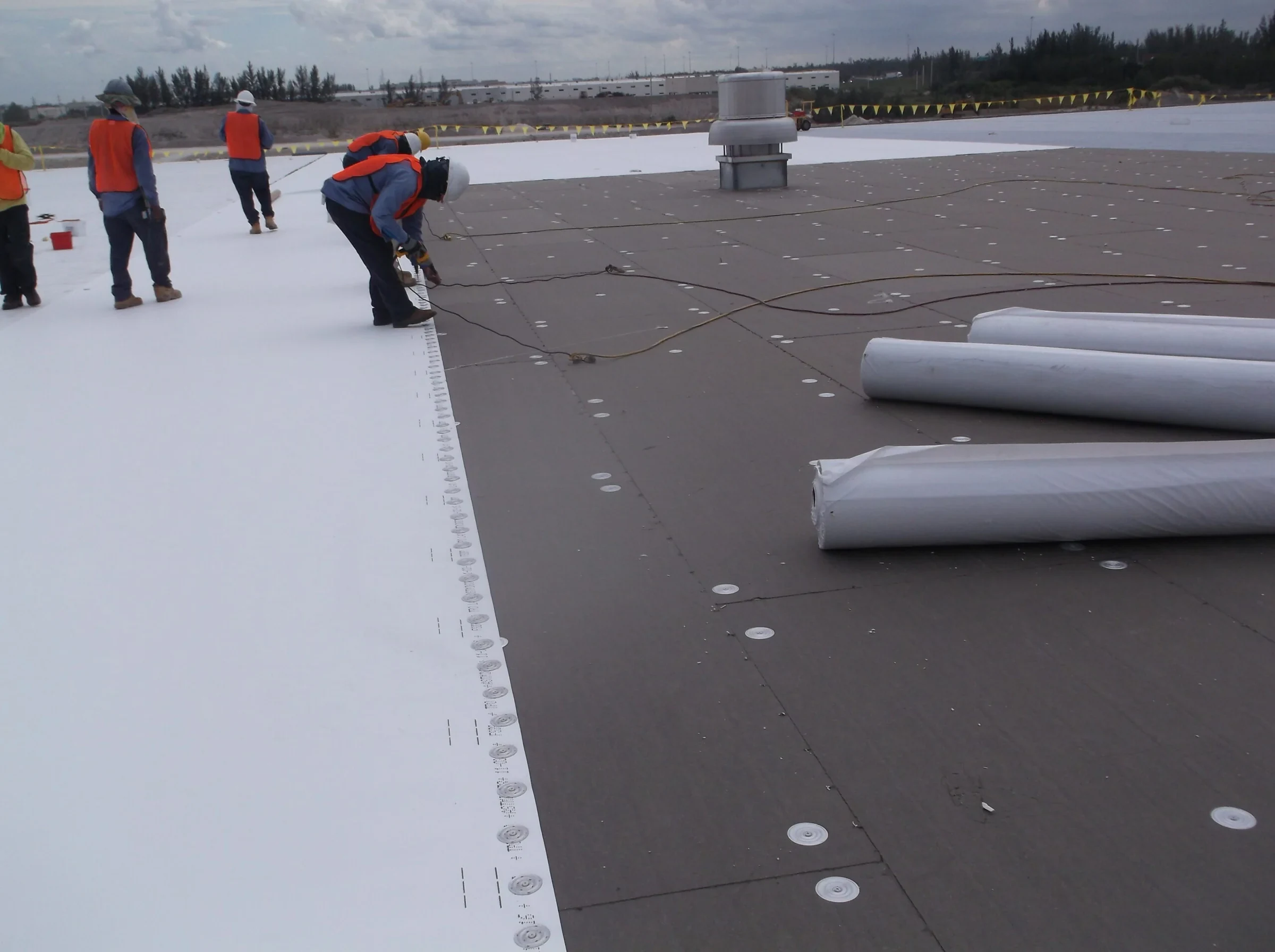
PVC's hot-air weld process follows the same physics as TPO's, membrane temperature, ambient conditions, and roller pressure all have to sit inside range for a sound fusion weld. Michigan's install season narrows that window through the fall, and our crews warm membrane rolls and monitor conditions through the day rather than assuming a morning weld temperature holds steady until quitting time.
We probe every completed seam the same day it's welded on Sarnafil jobs, which catches a cold-weld problem while the crew is still on site to fix it instead of after the membrane has fully set.
- Chemical or grease exposure at the roof surface
- Flashing complexity at corners and irregular geometry
- Reinforced versus standard sheet for traffic and detail stress
- Attachment method against the building's wind-uplift rating
- Detail drawing match at every termination point
- Field inspection completed ahead of warranty issuance
Detail Drawings and Field Inspection
Sarnafil publishes detail drawings for standard flashing and termination conditions, and matching the field installation to those drawings is what a field inspection checks before an NDL warranty issues. We build to those drawings on every Sarnafil-specified project and keep the inspection documentation as part of the closeout file.
Because PVC jobs frequently involve more complex flashing than a standard TPO or EPDM roof, the field inspection on a Sarnafil project often spends more time at penetrations and corners than it would on a simpler membrane installation.
When PVC Isn't the Right Answer
On a building with no chemical exposure and no unusual flashing complexity, PVC generally costs more than TPO for no added benefit, and we'll say so rather than push a product because of its reputation. Sarnafil's PVC earns its place on the specific roofs where its chemical resistance and welding characteristics solve a real problem, not as a default recommendation.
We've turned down PVC quotes we could have written just as easily as a lower-cost TPO recommendation, because the honest answer for that particular roof was that the added membrane cost wasn't buying the owner anything they actually needed.
Questions About Sika Sarnafil PVC Roofing
Why would Sarnafil be recommended over a TPO manufacturer?
Mainly when a roof has real chemical exposure, grease, solvents, or exhaust contact, that PVC handles better than TPO, or when the flashing geometry benefits from PVC's welding flexibility at corners and complex terminations.
Is Sarnafil PVC more expensive than TPO from another manufacturer?
Generally yes, per square foot. That premium makes sense on roofs with chemical exposure or complex detailing and less sense on a simple roof with no exposure issue, which is why we scope the actual need before recommending it.
What's the benefit of reinforced PVC sheet?
Added scrim reinforcement improves puncture and tear resistance, which matters most on roofs with heavy foot traffic or a lot of complex flashing where the membrane takes more mechanical stress than a typical open field.
Does PVC weld the same way in cold weather as TPO?
Both are heat-welded single-ply membranes with similar temperature sensitivity during installation. We follow the same probe-testing discipline on Sarnafil PVC seams that we would on any heat-welded membrane.
Can Sarnafil PVC be used as a recover over an existing roof?
Sometimes, depending on what cores show about the existing insulation and deck condition, and whether the building has already reached its two-membrane code limit. We evaluate that the same way we would for any recover project.
Related
Ready to review the roof scope?
Let’s Talk About Your Commercial Roof
Share the building, roof history, known leaks or damage, access constraints, and schedule. We’ll start with the roof condition and the facility below it.